
Strength Training After 40: The Non-Negotiable Exercise for Aging Well
If cardiovascular fitness is the engine of longevity, skeletal muscle is the chassis that holds everything together. After age forty, your body enters a phase of accelerating muscle loss that, left unaddressed, will progressively strip away your metabolic health, your physical independence, and your resilience against disease and injury. The science is unequivocal: strength training after 40 longevity is not optional for anyone who intends to age well — it is the single most important exercise investment you can make for your future self. At Curl Insurance Services, we help our clients understand the health science that drives smarter decisions about wellness and coverage planning. #StrengthTrainingAfter40Longevity
⠀
The Biological Reality After 40
Beginning around age thirty and accelerating through your forties and beyond, your body undergoes a series of physiological changes that make resistance training increasingly important with each passing year. Understanding these changes provides the motivation and context for prioritizing strength training as a non-negotiable component of your health strategy.
⠀
Accelerating Muscle Loss: Sarcopenia — the age-related loss of muscle mass and strength — proceeds at roughly three to eight percent per decade starting in your thirties, but the rate accelerates significantly after fifty. Without deliberate resistance training, a seventy-year-old may have lost thirty to forty percent of the muscle mass they had at thirty. This loss is not merely cosmetic — it represents a fundamental erosion of metabolic capacity, physical function, and physiological reserve.
⠀
Declining Bone Density: Bone density peaks in your late twenties and gradually declines thereafter, with women experiencing accelerated loss after menopause. Reduced bone density increases fracture risk — and fractures in older adults carry serious consequences including prolonged immobility, pneumonia, blood clots, and mortality rates that rival some cancers. Resistance training is one of the few interventions proven to maintain and even increase bone density through mechanical loading.
⠀
Hormonal Changes: Both men and women experience hormonal shifts after forty that affect muscle maintenance, fat distribution, and metabolic function. Testosterone declines gradually in men, while women experience more dramatic hormonal changes during perimenopause and menopause. These hormonal shifts make muscle preservation more challenging — but resistance training partially compensates by stimulating anabolic signaling pathways, improving insulin sensitivity, and promoting favorable hormonal responses to exercise.
⠀
Metabolic Slowing: Resting metabolic rate declines with age, driven primarily by loss of metabolically active muscle tissue. Each pound of muscle burns more calories at rest than an equivalent pound of fat, meaning that muscle loss directly reduces your daily energy expenditure. This metabolic slowdown contributes to the weight gain and body composition changes that many people experience in middle age — changes that resistance training directly counteracts by maintaining the muscle mass that keeps your metabolism elevated.
⠀
What the Research Shows About Strength Training and Longevity
The evidence connecting resistance training to longevity outcomes is extensive and compelling. Large epidemiological studies and meta-analyses have consistently demonstrated that regular resistance training reduces all-cause mortality, cardiovascular mortality, and cancer mortality independently of cardiovascular exercise.
As the landscape of strength training after 40 longevity continues to evolve, staying informed about the latest developments in strength training after 40 longevity becomes increasingly valuable for making evidence-based decisions about your health and financial future.
As the landscape of strength training after 40 longevity continues to evolve, staying informed about the latest developments in strength training after 40 longevity becomes increasingly valuable for making evidence-based decisions about your health and financial future.
⠀
A systematic review encompassing over 370,000 participants found that individuals who performed resistance training had a significantly lower risk of all-cause mortality compared to those who did not. The benefit was additive to cardiovascular exercise — meaning that combining resistance training with aerobic activity produced greater mortality reduction than either modality alone. The optimal combination appears to involve both regular cardiovascular training and two or more resistance training sessions per week.
⠀
The mechanisms through which strength training extends life are multifaceted. Preserved muscle mass maintains metabolic health and insulin sensitivity. Greater muscular strength reduces fall risk and fracture incidence. Enhanced physical function preserves independence and quality of life. Improved body composition reduces chronic inflammation. And the neurological benefits of resistance training — including enhanced cognitive function and reduced dementia risk — provide additional protective effects that contribute to both lifespan and healthspan.
⠀
The Fall Prevention Imperative
Falls are the leading cause of injury-related death in adults over sixty-five and the most common cause of traumatic brain injury in older adults. Each year millions of older Americans fall, with a significant percentage resulting in serious injuries including hip fractures, head injuries, and lacerations. The healthcare costs associated with falls are staggering — representing billions in annual medical expenditures.
⠀
Resistance training is the most effective intervention for fall prevention. Stronger legs provide more stable balance and faster corrective responses when balance is challenged. Greater muscle mass provides physical padding that reduces injury severity if a fall occurs. Improved bone density reduces fracture risk from fall-related impacts. And the neurological adaptations from resistance training — improved proprioception, reaction time, and neuromuscular coordination — enhance the balance systems that prevent falls from occurring in the first place.
⠀
The fall prevention benefits of resistance training carry direct coverage implications. Falls that result in hip fractures, head injuries, or other serious outcomes generate enormous medical costs and frequently trigger the transition from independent to assisted living. Investing in the muscular strength that prevents these outcomes is one of the most impactful health investments an individual over forty can make.
⠀
Essential Movement Patterns
An effective resistance training program for longevity does not require complicated exercises, expensive equipment, or hours in the gym. It requires consistent practice of fundamental human movement patterns with progressive resistance. These patterns form the foundation of functional capacity and translate directly into the physical demands of daily life.
The practical implications of strength training after 40 longevity extend far beyond theory, offering actionable insights for anyone committed to long-term wellness.
The practical implications of strength training after 40 longevity extend far beyond theory, offering actionable insights for anyone committed to long-term wellness.
⠀
Squatting: The ability to lower yourself to a seated position and rise again under control is fundamental to independence. Squats and their variations build the quadriceps, glutes, and core strength needed for sitting, standing, climbing stairs, and getting up from the floor. Variations range from assisted bodyweight squats for beginners to barbell squats for advanced trainees.
⠀
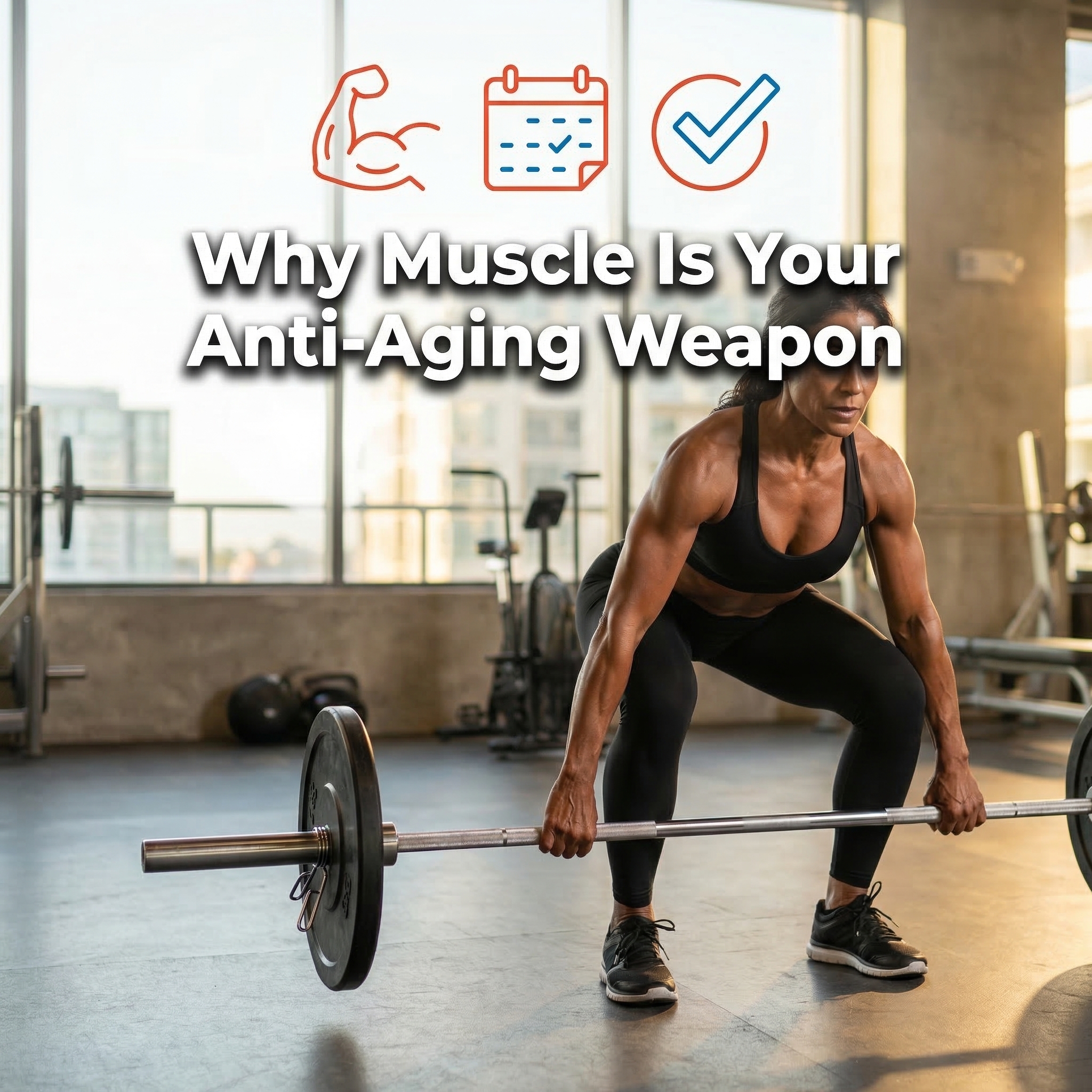
Hip Hinging: Deadlifts and their variations train the posterior chain — glutes, hamstrings, and lower back — through the hip hinge pattern used every time you pick something up, bend forward, or climb. Strong hip extensors protect your lower back, support posture, and provide the power base for most physical activities.
⠀
Pressing: Both horizontal pressing (bench press, push-ups) and vertical pressing (overhead press) develop the chest, shoulder, and triceps strength needed for pushing objects, placing items on shelves, and supporting yourself during falls. Upper body pressing strength is particularly important for maintaining independence in daily activities.
⠀
Pulling: Rows, pull-ups, and their variations build the back, biceps, and rear shoulder strength that counterbalances pressing movements and supports healthy posture. Strong pulling muscles are essential for opening doors, carrying objects, and maintaining the upright posture that prevents the rounded-shoulder posture common in aging.
⠀
Carrying: Loaded carries — walking while holding heavy objects — develop grip strength, core stability, and full-body functional capacity. Grip strength has emerged as one of the strongest predictors of all-cause mortality in aging populations, making carrying exercises particularly valuable for longevity.
⠀
Single-Leg Work: Lunges, step-ups, and single-leg variations develop the unilateral strength and balance that walking, stair climbing, and fall recovery require. Single-leg exercises also address strength imbalances between sides that can contribute to injury risk and movement dysfunction.
⠀
Programming Principles for Longevity
Designing a resistance training program for long-term health requires balancing several principles that differ somewhat from programming for athletic performance or bodybuilding. The goal is sustainable, progressive training that builds and maintains functional capacity over decades.
⠀
Frequency: Current evidence supports two to four resistance training sessions per week for longevity benefits. Two sessions per week is the minimum effective dose, while three to four sessions allow for greater volume and more comprehensive training of all movement patterns. The key is consistency over months and years rather than intensity in any single session.
⠀
Progressive Overload: Your body adapts to the demands placed upon it. To continue building strength and maintaining muscle mass, you must gradually increase the challenge over time — adding weight, increasing repetitions, or progressing to more demanding exercise variations. This principle of progressive overload is the engine of all strength adaptation and must be respected regardless of your age or experience level.
⠀
Recovery: Recovery capacity may decrease somewhat with age, making adequate rest between training sessions important. Most individuals over forty benefit from at least forty-eight hours between sessions targeting the same muscle groups. Sleep quality, nutrition — particularly protein intake — and stress management all influence recovery capacity and should be optimized alongside your training program.
⠀
Joint-Friendly Approaches: Training longevity — the ability to continue training for decades — requires respecting joint health. This may mean favoring exercises that load muscles effectively while minimizing joint stress, using controlled tempos rather than ballistic movements, and addressing mobility limitations through targeted flexibility work. The goal is to train hard enough to stimulate adaptation while preserving the joint health that allows continued training for life.
⠀
Getting Started Safely
For individuals who are new to resistance training or returning after a long break, beginning appropriately is essential for both safety and long-term adherence. The initial weeks and months set the foundation for decades of productive training.
⠀
Working with a qualified personal trainer — even for just a few sessions — provides enormous value for beginners. A trainer can assess your current movement capacity, teach proper technique for fundamental exercises, design an appropriate starting program, and establish a progression plan. This initial investment in professional guidance prevents injuries, builds confidence, and accelerates your progress compared to self-directed learning.
⠀
Start conservatively. Begin with lighter weights and higher repetitions to develop movement competency and allow connective tissues to adapt. Progress gradually over weeks and months, adding resistance as technique remains solid and recovery stays adequate. The individuals who maintain lifelong training habits are those who started sensibly and built progressively, not those who began with unsustainable intensity.
⠀
Why This Matters for Your Health Strategy
The conversation around strength training after 40 longevity is more relevant than ever. As research into strength training after 40 longevity accelerates, individuals who stay informed position themselves to make smarter decisions about their health and coverage. Whether you are just beginning to explore strength training after 40 longevity or have been following these developments closely, the evidence suggests that proactive engagement with strength training after 40 longevity can yield meaningful benefits over time.
Related Reading from Our Longevity Series
Continue exploring strength training after 40 longevity and related longevity topics with these in-depth guides:
- How Wearable Health Tech Is Revolutionizing Personal Optimization in 2026
- The $111 Million Bet on Reversing Aging: Inside the XPRIZE Healthspan Challenge
- How to Build a Health Coverage Strategy That Supports Your Longevity Goals
Strength Training and Coverage Planning
The connection between muscular strength and healthcare utilization is direct and measurable. Stronger individuals experience fewer falls, fewer fractures, fewer hospitalizations, fewer metabolic diseases, and maintain independence longer — all of which reduce lifetime healthcare costs. Investing in the exercise, coaching, and medical guidance that support effective strength training is fundamentally an investment in reduced future healthcare expenditure.
⠀
Concierge medicine practices increasingly incorporate body composition assessment via DEXA scanning, functional movement screening, and exercise prescription into their comprehensive health optimization programs. These services provide the objective data needed to track your muscular health over time and adjust your training program based on measured outcomes rather than guesswork.
⠀
At Curl Insurance Services, we help clients across nine states build coverage strategies that protect active individuals and support proactive health optimization. Accident insurance provides essential protection for individuals engaged in regular physical training. Foundation health insurance covers injuries and health events that training alone cannot prevent. And concierge medicine access ensures your training is guided by objective health data and physician oversight.
⠀
The Kaiser Family Foundation has documented how musculoskeletal health drives a significant portion of healthcare spending in older populations — reinforcing the economic case for investing in the strength training that prevents these costs from materializing.
⠀
Text us at (949) 506-2746 to explore coverage strategies that protect your active lifestyle and support your commitment to aging strong. Our advisors at Curl Insurance Services design coverage as resilient as the body you are building.
⠀