
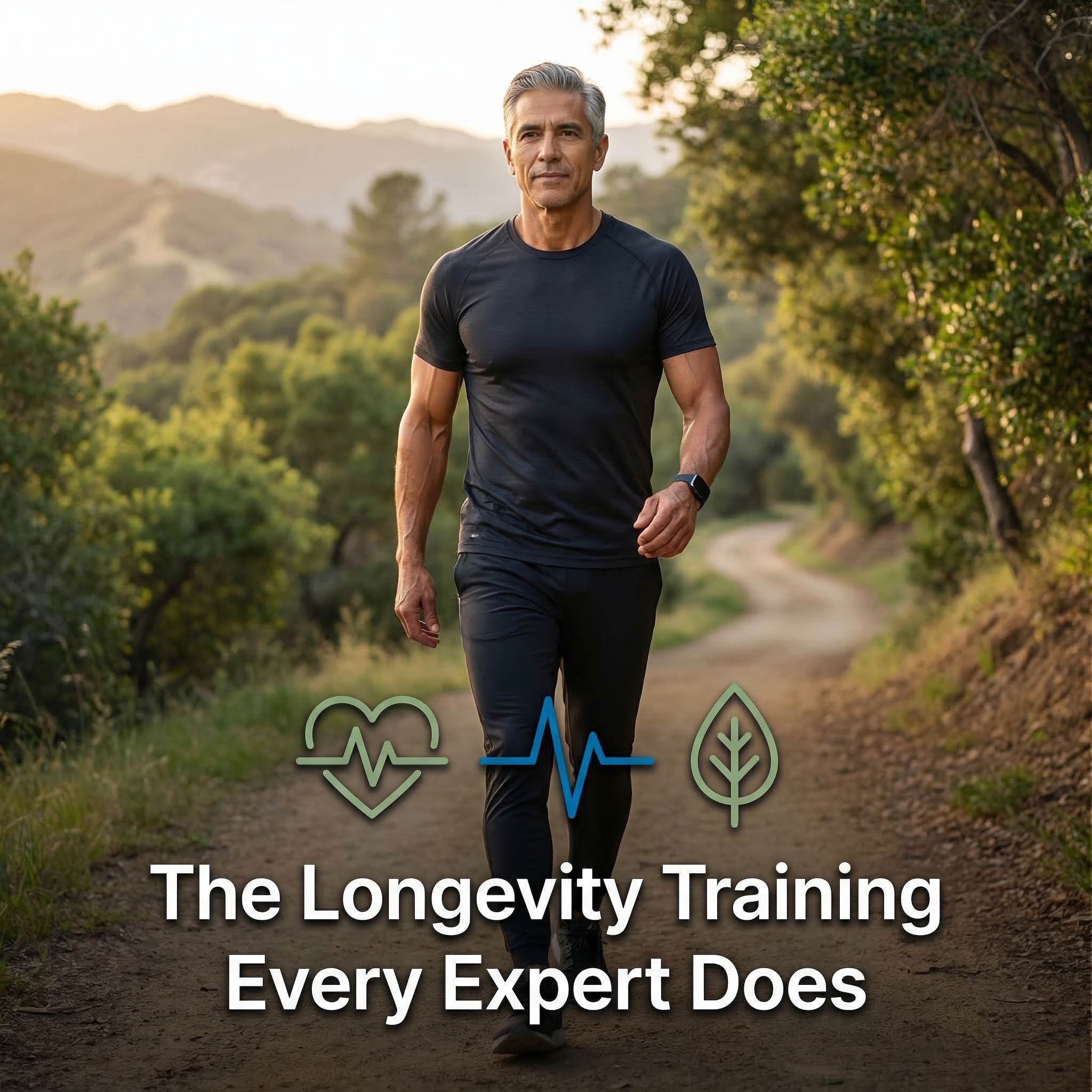
Zone 2 Training: The Low-Intensity Protocol Every Longevity Expert Recommends
In a fitness culture obsessed with high-intensity workouts, crushing personal records, and pushing to absolute limits, the most impactful exercise protocol for longevity is surprisingly gentle. It does not leave you gasping for breath, soaked in sweat, or hobbling the next day. Yet zone 2 training longevity cardio has emerged as the single most frequently recommended exercise modality among longevity physicians, exercise scientists, and health optimization experts — and the science behind this consensus is compelling. At Curl Insurance Services, we help our clients understand the health strategies that matter most for living well and planning wisely. #Zone2TrainingLongevityCardio
⠀
What Zone 2 Training Actually Is
Zone 2 refers to a specific intensity of cardiovascular exercise — the upper range of what exercise physiologists call the aerobic zone. In practical terms, Zone 2 is the highest intensity at which your body can primarily rely on fat oxidation and aerobic metabolism for energy, before crossing the threshold where anaerobic metabolism begins contributing significantly. It is typically characterized as an effort level where you can maintain a conversation — though you would prefer not to — and where breathing is noticeably elevated but controlled.
⠀
In heart rate terms, Zone 2 typically corresponds to roughly sixty to seventy percent of your maximum heart rate, though individual variation means these percentages are approximate. A more precise way to identify your Zone 2 is through lactate testing, where blood lactate levels remain below approximately two millimoles per liter. At this intensity, your mitochondria are working at their optimal aerobic capacity — burning fatty acids efficiently, producing energy without accumulating metabolic byproducts, and receiving the sustained stimulus that drives beneficial adaptations.
⠀
The key distinction is that Zone 2 feels easy — deceptively, perhaps even frustratingly easy — compared to the intense workouts that dominate popular fitness culture. Many people initially resist Zone 2 training because it does not feel hard enough to be productive. This perception is precisely backwards. The moderate, sustained nature of Zone 2 is what makes it uniquely effective for the specific adaptations that matter most for long-term health and longevity.
⠀
The Mitochondrial Engine
To understand why Zone 2 training is so powerful, you need to understand mitochondria — the organelles within your cells that produce the vast majority of the energy your body uses. Every cell in your body contains hundreds to thousands of mitochondria, and the health, density, and efficiency of these organelles directly determine your metabolic capacity, energy levels, disease resilience, and aging trajectory.
As the landscape of zone 2 training longevity cardio continues to evolve, staying informed about the latest developments in zone 2 training longevity cardio becomes increasingly valuable for making evidence-based decisions about your health and financial future.
As the landscape of zone 2 training longevity cardio continues to evolve, staying informed about the latest developments in zone 2 training longevity cardio becomes increasingly valuable for making evidence-based decisions about your health and financial future.
⠀
Zone 2 training specifically targets mitochondrial adaptation in ways that higher-intensity training does not. During sustained aerobic exercise at Zone 2 intensity, your mitochondria are maximally engaged in fat oxidation — the most efficient energy production pathway. This sustained demand stimulates your cells to produce more mitochondria (mitochondrial biogenesis), improve the efficiency of existing mitochondria, and enhance the enzymatic pathways that support aerobic metabolism.
⠀
The result of consistent Zone 2 training over months and years is a fundamentally more capable metabolic engine. More mitochondria with better function means greater capacity to produce energy from fat, improved blood sugar regulation through enhanced glucose uptake, reduced reliance on anaerobic metabolism during daily activities, and greater physiological reserve for responding to physical and metabolic stress. These adaptations are the biological foundation of cardiorespiratory fitness — and they are best developed through the specific, sustained stimulus that Zone 2 provides.
⠀
Why Longevity Experts Prioritize Zone 2
The convergence of expert opinion around Zone 2 training is remarkable. Physicians, exercise scientists, and health optimization specialists who otherwise hold diverse views on diet, supplementation, and other health topics consistently identify Zone 2 as the cornerstone of their exercise recommendations. Several reasons drive this consensus.
⠀
Metabolic Flexibility: Zone 2 training develops metabolic flexibility — your body’s ability to efficiently switch between burning fat and burning carbohydrates for fuel depending on demand. Metabolic inflexibility — the inability to efficiently oxidize fat — is a hallmark of insulin resistance, metabolic syndrome, and type 2 diabetes. By training your mitochondria to oxidize fat efficiently, Zone 2 addresses one of the root causes of metabolic disease rather than merely managing its symptoms.
⠀
Sustainable Volume: Because Zone 2 is moderate intensity, it can be performed frequently and for extended durations without creating the recovery burden that high-intensity training demands. This sustainability matters enormously for longevity — the accumulated volume of aerobic exercise over decades is one of the strongest predictors of cardiovascular health and all-cause mortality. Zone 2 allows you to accumulate the training volume that drives long-term adaptation without the injury risk, burnout, or overtraining that excessive high-intensity work can cause.
⠀
Cardiovascular Remodeling: Sustained Zone 2 training promotes beneficial structural adaptations in the heart — including increased stroke volume, enhanced ventricular compliance, and improved coronary blood flow — that collectively strengthen cardiovascular function. These adaptations develop gradually through consistent training and represent lasting improvements in the organ most central to longevity.
⠀
Fat Oxidation and Body Composition: While Zone 2 is not the fastest path to weight loss in terms of calories burned per session, it is the most effective training zone for developing your body’s capacity to burn fat. Over time, enhanced fat oxidation capacity supports healthier body composition, reduced visceral fat, and improved metabolic markers — all without the stress hormones and appetite stimulation that extreme training can trigger.
⠀
Low Injury Risk: Zone 2 exercise — walking, cycling, swimming, rowing at moderate intensity — carries minimal injury risk compared to high-intensity training, plyometrics, or heavy lifting. For individuals over forty who need to train consistently for decades, an approach that minimizes injury risk while maximizing metabolic benefit is profoundly practical.
⠀
How to Find Your Zone 2
Identifying your personal Zone 2 intensity ensures you are training at the right level to achieve the specific adaptations that make this protocol so valuable. Several methods can help you find your zone, ranging from clinical precision to practical estimation.
The practical implications of zone 2 training longevity cardio extend far beyond theory, offering actionable insights for anyone committed to long-term wellness.
The practical implications of zone 2 training longevity cardio extend far beyond theory, offering actionable insights for anyone committed to long-term wellness.
⠀
Lactate Testing: The gold standard for Zone 2 identification is lactate threshold testing, where blood lactate is measured at progressively increasing exercise intensities. Your Zone 2 ceiling is the highest intensity at which blood lactate remains below approximately two millimoles per liter. This testing is available through sports medicine clinics, exercise physiology laboratories, and some concierge medicine practices. While the most precise method, it requires clinical resources and periodic retesting as your fitness improves.
⠀
Heart Rate Estimation: A practical starting point uses heart rate zones calculated from your maximum heart rate. Zone 2 typically falls between sixty and seventy percent of your maximum. If you do not know your true maximum heart rate, the standard estimation formula provides a rough starting point, though individual variation can be significant. Using a heart rate monitor during training helps you maintain the appropriate intensity throughout your session.
⠀
The Talk Test: Perhaps the most accessible method, the talk test uses conversational ability as a proxy for metabolic intensity. During Zone 2 training, you should be able to speak in complete sentences, though it requires slightly more effort than resting conversation. If you cannot complete a sentence without gasping, you have exceeded Zone 2. If conversation feels completely effortless, you may be below Zone 2 and should increase intensity slightly.
⠀
Rate of Perceived Exertion: On a scale of one to ten, Zone 2 training should feel like a four to five — moderate effort that you could sustain for an extended period. It should feel like work, but comfortable work. If you find yourself needing to stop or significantly slow down after twenty minutes, you are likely above Zone 2.
⠀
Programming Zone 2 Into Your Week
The current expert consensus on Zone 2 training volume calls for three to four sessions per week, each lasting forty-five to sixty minutes. This translates to roughly three to four hours of Zone 2 cardiovascular training weekly — a substantial time commitment, but one that can be accommodated through activities that integrate naturally into daily life.
⠀
Activity Selection: Zone 2 can be performed through any sustained cardiovascular activity — walking on an incline, cycling, swimming, rowing, elliptical training, or hiking. The best activity is one you genuinely enjoy and will perform consistently. Many people find that cycling or walking on an inclined treadmill makes Zone 2 training easiest to sustain at the correct intensity, as running at Zone 2 pace can feel uncomfortably slow for experienced runners.
⠀
Integration with Other Training: Zone 2 training complements rather than replaces other exercise modalities. A well-structured weekly exercise program for longevity includes Zone 2 cardiovascular training as the base, one to two sessions of high-intensity interval training for VO2 max development, two to four resistance training sessions for muscle maintenance and bone density, and mobility or stability work to maintain functional movement quality. Zone 2 serves as the foundation upon which all other training is built.
⠀
Tracking Progress: Zone 2 fitness improvements manifest as the ability to maintain higher speeds or power outputs while keeping your heart rate in the Zone 2 range. If you started by walking at 3.5 miles per hour to maintain Zone 2 heart rate and now can walk at 4.0 miles per hour at the same heart rate, your aerobic fitness has measurably improved. Wearable devices that track heart rate and exercise pace provide accessible tools for monitoring this progression over time.
⠀
Common Mistakes to Avoid
Despite its apparent simplicity, Zone 2 training is frequently performed incorrectly — usually by going too hard. Understanding and avoiding common mistakes helps ensure you actually receive the specific adaptations that make this protocol so valuable.
⠀
Going Too Fast: The most common mistake is training above Zone 2 intensity. When you exceed the aerobic threshold, your body shifts toward anaerobic metabolism — which triggers different adaptations than those Zone 2 is designed to develop. Many people find that maintaining true Zone 2 requires deliberately restraining their pace, especially early in a training program when their aerobic fitness may be underdeveloped relative to their muscular capacity.
⠀
Inconsistent Effort: Zone 2 training should maintain a relatively steady heart rate throughout the session. Alternating between bursts of higher intensity and recovery periods converts your Zone 2 session into an interval workout — which serves a different purpose. Use a heart rate monitor to maintain consistent effort throughout your session.
⠀
Insufficient Duration: Sessions shorter than thirty minutes provide minimal Zone 2 benefit. The metabolic adaptations that make Zone 2 training so valuable require sustained aerobic demand over extended periods. Aim for forty-five to sixty minutes per session to maximize the mitochondrial stimulus.
⠀
Why This Matters for Your Health Strategy
The conversation around zone 2 training longevity cardio is more relevant than ever. As research into zone 2 training longevity cardio accelerates, individuals who stay informed position themselves to make smarter decisions about their health and coverage. Whether you are just beginning to explore zone 2 training longevity cardio or have been following these developments closely, the evidence suggests that proactive engagement with zone 2 training longevity cardio can yield meaningful benefits over time.
Related Reading from Our Longevity Series
Continue exploring zone 2 training longevity cardio and related longevity topics with these in-depth guides:
- Sauna and Cold Exposure for Longevity: What the Research Actually Shows
- Digital Health Twins: How AI Models of Your Body Will Predict Disease Before It Starts
- Concierge Medicine vs. Traditional Coverage: The Smart Hybrid Approach for 2027
Zone 2 and Your Coverage Strategy
The metabolic health improvements driven by consistent Zone 2 training — enhanced insulin sensitivity, improved lipid profiles, reduced inflammatory markers, and superior cardiovascular function — directly reduce the chronic disease risk that drives the majority of healthcare costs. Individuals who maintain high levels of cardiorespiratory fitness throughout their lives require fewer medications, experience fewer hospitalizations, and maintain independence longer.
⠀
Supporting your Zone 2 training commitment through appropriate health infrastructure makes practical sense. Concierge medicine practices offer the exercise testing, lactate threshold assessment, and personalized training guidance that optimize your training stimulus. Accident insurance protects active individuals during outdoor training activities. Foundation health insurance provides the safety net for any health events that arise. Health Savings Accounts fund the fitness-related testing and services that standard insurance does not cover.
⠀
At Curl Insurance Services, we help clients across nine states build coverage strategies that align with their commitment to proactive health. The Kaiser Family Foundation has documented how physical inactivity drives an enormous proportion of chronic disease costs — making investment in exercise programming and the coverage that supports it one of the most economically rational health decisions available.
⠀
Text us at (949) 506-2746 to explore coverage that supports your dedication to cardiovascular fitness and longevity. Our advisors at Curl Insurance Services design comprehensive strategies that protect your health investment.
⠀