
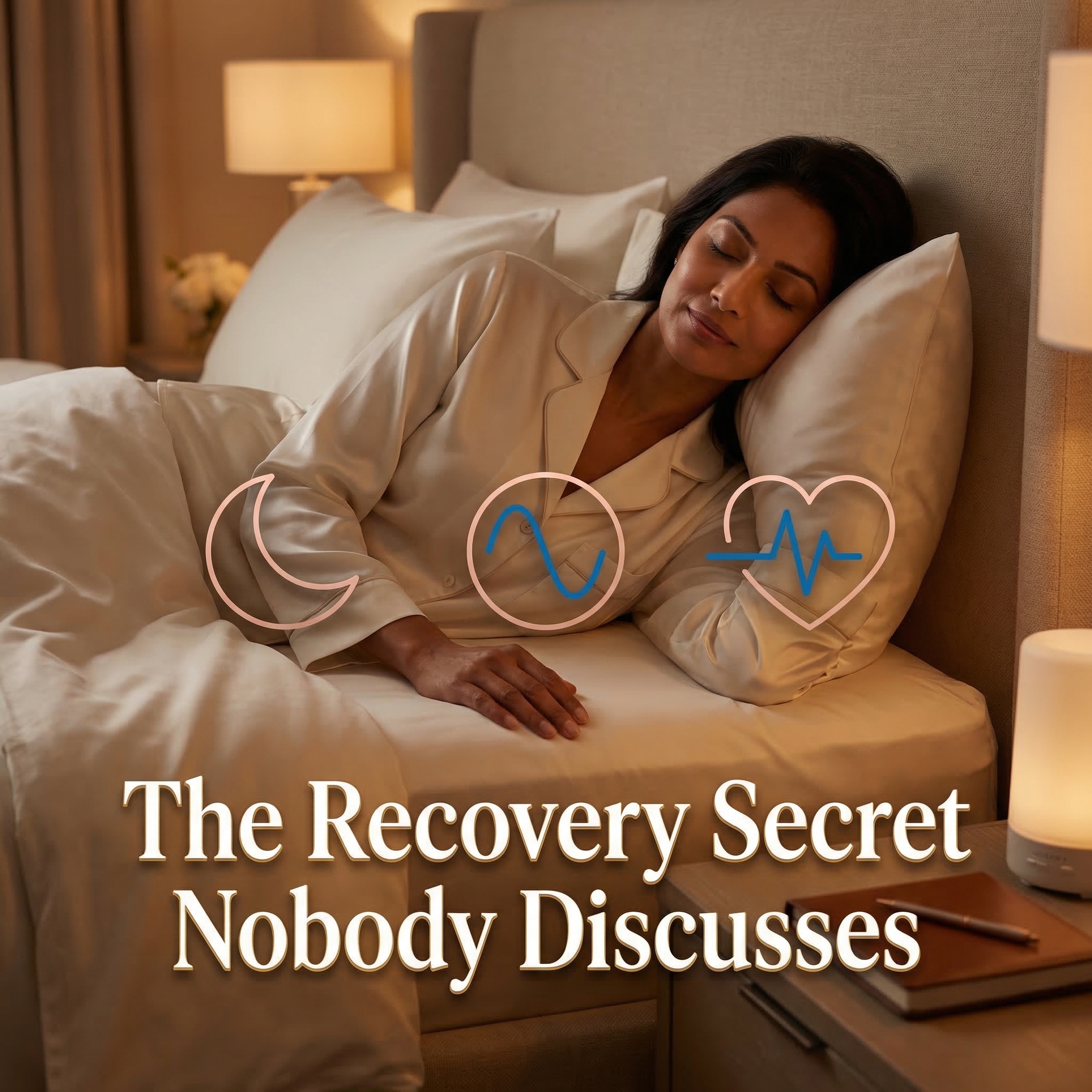
Sleep optimization longevity science has revealed that the quality and architecture of your sleep may be more important than the number of hours you spend in bed — and mastering this single variable could be the most powerful longevity intervention available to you. #SleepOptimizationLongevityScience
⠀
Sleep research has undergone a revolution in the past decade. What was once dismissed as a passive state of unconsciousness is now understood to be an intensely active biological process during which your body repairs damaged tissues, consolidates memories, clears toxic metabolic waste from the brain, and recalibrates hormonal systems. The emerging science makes clear that sleep is not merely recovery from wakefulness — it is the foundation upon which every other aspect of health is built.
⠀
Why Sleep Quality Trumps Sleep Quantity
⠀
The popular advice to “get eight hours of sleep” captures only a fraction of what matters for longevity. Sleep architecture — the specific stages you cycle through each night and the time spent in each — is far more predictive of health outcomes than total sleep duration alone. A person who sleeps seven hours with excellent architecture and high sleep efficiency will derive more benefit than someone who spends nine hours in bed with fragmented, shallow sleep.
⠀
There are four primary sleep stages that repeat in roughly ninety-minute cycles throughout the night. Light sleep serves as a transition phase. Deep sleep, also called slow-wave sleep, is when the majority of physical restoration occurs — growth hormone is released, tissues are repaired, and the immune system is strengthened. REM sleep is critical for emotional processing, memory consolidation, and creative problem-solving. Each stage serves distinct functions, and deficiency in any one creates specific health consequences.
⠀
The Glymphatic System: Your Brain’s Nightly Cleaning Crew
⠀
One of the most important sleep discoveries of recent years is the glymphatic system — a waste-clearance mechanism that is primarily active during deep sleep. During waking hours, metabolic byproducts including beta-amyloid and tau proteins accumulate in the brain. These are the same proteins implicated in Alzheimer’s disease and other forms of neurodegeneration. During deep sleep, cerebrospinal fluid flows through the brain in a pulsing rhythm, flushing these toxic substances out.
⠀
Research has shown that even a single night of poor sleep results in measurable increases in brain beta-amyloid levels. Chronic sleep disruption accelerates the accumulation of these proteins, potentially contributing to cognitive decline years or decades before symptoms appear. This finding alone makes deep sleep optimization one of the most important preventive strategies for long-term brain health — and it highlights why addressing sleep quality should be a priority in any longevity plan.
⠀
Temperature: The Master Sleep Variable
⠀
As the landscape of sleep optimization longevity science continues to evolve, staying informed about the latest developments in sleep optimization longevity science becomes increasingly valuable for making evidence-based decisions about your health and financial future.
As the landscape of sleep optimization longevity science continues to evolve, staying informed about the latest developments in sleep optimization longevity science becomes increasingly valuable for making evidence-based decisions about your health and financial future.
Your core body temperature must drop by approximately two to three degrees Fahrenheit to initiate and maintain quality sleep. This is perhaps the most actionable insight from modern sleep science, because temperature is one of the few sleep variables you can directly control with immediate effect. A bedroom that is too warm is one of the most common and easily corrected causes of poor sleep quality.
⠀
The optimal sleeping temperature for most adults falls between sixty and sixty-seven degrees Fahrenheit. Cooling the room, using breathable bedding materials, and taking a warm shower or bath sixty to ninety minutes before bed — which paradoxically triggers a core temperature drop through vasodilation — are all evidence-based strategies. Advanced options include cooling mattress pads and temperature-regulating sleep systems, which allow precise temperature control throughout the night without over-cooling the entire room.
⠀
Light Exposure: Programming Your Internal Clock
⠀
Your circadian rhythm — the internal twenty-four-hour clock that governs sleep and wakefulness — is primarily set by light exposure. Bright light in the morning advances your clock and promotes alertness. Light exposure in the evening, particularly blue-spectrum light from screens and artificial lighting, delays melatonin production and pushes your sleep onset later. Managing this light-dark cycle is fundamental to consistent, high-quality sleep.
⠀
The protocol is straightforward. Get bright outdoor light exposure within the first hour of waking to anchor your circadian rhythm. Maintain well-lit environments during the first half of your day to support alertness. In the two to three hours before your target bedtime, dim overhead lights, switch to warm-spectrum bulbs or candles, and minimize screen exposure. If screens are unavoidable, blue-light-blocking glasses with amber or red lenses can reduce the circadian disruption significantly.
⠀
The Adenosine Sleep Drive
⠀
The practical implications of sleep optimization longevity science extend far beyond theory, offering actionable insights for anyone committed to long-term wellness.
The practical implications of sleep optimization longevity science extend far beyond theory, offering actionable insights for anyone committed to long-term wellness.
Understanding adenosine — the molecule that creates your natural sleep pressure — transforms how you think about caffeine and daytime energy management. Adenosine accumulates in the brain during waking hours, creating increasing pressure to sleep. Caffeine works by blocking adenosine receptors, which is why it promotes alertness. However, it does not reduce adenosine levels — it merely masks the signal. When the caffeine wears off, the accumulated adenosine hits all at once, creating the familiar crash.
⠀
For optimal sleep, caffeine intake should be limited to the first eight to ten hours of your waking day. For someone who wakes at six in the morning, this means no caffeine after two to four in the afternoon. Caffeine has a half-life of approximately five to six hours, meaning half of a coffee consumed at noon is still circulating at six in the evening. Even if you can fall asleep with caffeine in your system, research shows it reduces deep sleep duration — precisely the stage most critical for longevity.
⠀
Evidence-Based Supplements for Sleep
⠀
The supplement landscape for sleep is crowded with products making bold claims, but only a handful have meaningful research support. Magnesium, particularly in the threonate and bisglycinate forms, has demonstrated improvements in sleep quality through its role in GABA receptor activation and nervous system relaxation. Doses of two hundred to four hundred milligrams taken thirty to sixty minutes before bed are typically recommended based on the available research.
⠀
Apigenin, a compound found in chamomile, has shown anxiolytic properties that can ease the transition to sleep without the grogginess associated with stronger sleep aids. Theanine, an amino acid from tea, promotes relaxation without sedation and may improve sleep quality when taken at doses of one hundred to two hundred milligrams. These supplements work with your body’s natural sleep mechanisms rather than overriding them, which is an important distinction from pharmaceutical sleep aids that often suppress deep sleep and REM stages.
⠀
When to Get a Sleep Study
⠀
Despite optimal sleep hygiene, some people continue to experience poor sleep quality due to underlying sleep disorders. Sleep apnea — a condition in which breathing repeatedly stops and starts during sleep — affects an estimated twenty-two million Americans and is severely underdiagnosed. Symptoms include snoring, daytime fatigue despite adequate sleep duration, morning headaches, and difficulty concentrating. Untreated sleep apnea dramatically increases the risk of cardiovascular disease, stroke, and cognitive decline.
⠀
A polysomnography study, typically covered by health insurance with a physician referral, provides comprehensive data on your sleep architecture, breathing patterns, oxygen levels, and limb movements. If you have implemented sleep optimization strategies and still wake feeling unrefreshed, a sleep study should be a priority. Early diagnosis and treatment of sleep disorders is one of the highest-value interventions in preventive medicine, with measurable improvements in cardiovascular risk, cognitive function, and daily quality of life.
⠀
The Hormonal Cascade of Poor Sleep
⠀
Sleep deprivation creates a hormonal environment that accelerates biological aging. Cortisol, the primary stress hormone, becomes elevated and follows an abnormal daily pattern. Growth hormone release, which peaks during deep sleep and is essential for tissue repair and regeneration, is blunted. Insulin sensitivity decreases, increasing the risk of metabolic syndrome and type two diabetes. Testosterone and estrogen levels decline, affecting energy, body composition, and overall vitality.
⠀
Research shows that just one week of sleeping six hours per night instead of eight produces changes in the expression of over seven hundred genes, including genes associated with immune function, inflammation, and stress response. These are not subtle changes — they represent a fundamental shift in how your body operates at the molecular level. Chronic sleep restriction effectively accelerates biological aging, making sleep optimization one of the most impactful anti-aging strategies available.
⠀
Creating Your Sleep Optimization Protocol
⠀
An effective sleep protocol addresses multiple variables simultaneously. Begin with consistency: set a fixed wake time seven days per week and a target bedtime that allows for seven to eight hours of sleep opportunity. Create a sixty to ninety minute wind-down routine that includes dimming lights, reducing stimulation, and engaging in calming activities. Optimize your bedroom environment for darkness, quiet, and cool temperature.
⠀
Track your progress using a sleep-tracking wearable or smart ring that measures sleep stages, heart rate variability, and respiratory rate. While consumer devices are not as accurate as clinical polysomnography, they provide valuable trend data that can inform your optimization efforts. Pay particular attention to your deep sleep and REM percentages. If these consistently fall below expected ranges despite good sleep hygiene, consult a physician or sleep specialist for further evaluation.
⠀
Sleep and Insurance: Coverage You Should Know About
⠀
Most health insurance plans cover diagnostic sleep studies and treatment for diagnosed sleep disorders, including CPAP machines for sleep apnea. Preventive screenings that can identify sleep-related health risks, such as blood pressure monitoring and metabolic panels, are typically covered under the Affordable Care Act’s preventive services mandate. These benefits represent significant value for anyone taking sleep optimization seriously.
⠀
Where traditional insurance falls short is in the optimization layer — advanced sleep coaching, comprehensive sleep environment assessments, and the kind of personalized protocol development that produces the best results. Concierge medicine physicians can provide this level of attention, combining clinical sleep assessment with personalized optimization strategies that go far beyond what a standard fifteen-minute appointment allows. The combination of insurance-covered diagnostics and concierge-level optimization creates a powerful sleep health infrastructure.
⠀
Why This Matters for Your Health Strategy
The conversation around sleep optimization longevity science is more relevant than ever. As research into sleep optimization longevity science accelerates, individuals who stay informed position themselves to make smarter decisions about their health and coverage. Whether you are just beginning to explore sleep optimization longevity science or have been following these developments closely, the evidence suggests that proactive engagement with sleep optimization longevity science can yield meaningful benefits over time.
Related Reading from Our Longevity Series
Continue exploring sleep optimization longevity science and related longevity topics with these in-depth guides:
- Biohacking Technologies Ranked: Red Light, Hyperbaric Oxygen, Peptides, and More
- Age Reversal Therapies in Development: A 2026 Progress Report
- The Proactive Health Stack: Building a Coverage Strategy That Catches Problems Early
Investing in Your Sleep Is Investing in Your Future
⠀
Every hour invested in sleep optimization returns compounding dividends across every dimension of health. Better sleep improves cognitive performance, emotional resilience, physical recovery, immune function, metabolic health, and hormonal balance. It reduces the risk of the chronic diseases that drive the majority of healthcare costs and suffering. And unlike many health interventions, the benefits of improved sleep are felt almost immediately — often within the first week of implementing better practices.
⠀
At Curl Insurance Services, we understand that proactive health management starts with the fundamentals — and nothing is more fundamental than sleep. We help clients build health coverage strategies that support comprehensive wellness, from insurance plans that cover sleep studies and preventive screenings to guidance on how concierge medicine can fill the optimization gaps. Text us at (949) 506-2746 to discuss how your coverage can support your commitment to better health through better sleep.