
VO2 Max: The Single Best Predictor of How Long You’ll Live
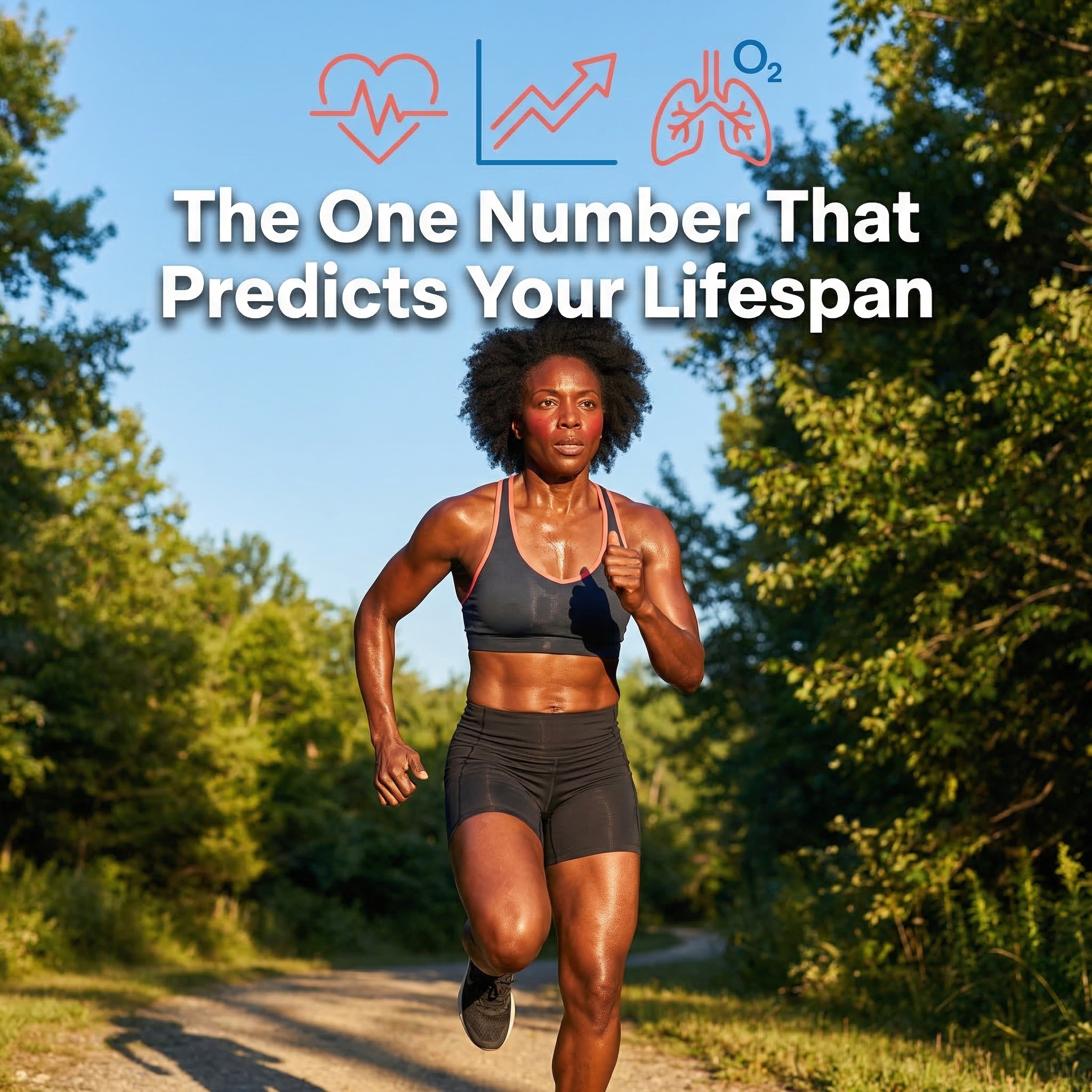
Among all the health metrics you could measure — blood pressure, cholesterol, body weight, blood sugar — one stands above the rest as the most powerful predictor of how long and how well you will live. Your VO2 max longevity predictor — the maximum amount of oxygen your body can utilize during intense exercise — has emerged from decades of research as the single strongest correlate of all-cause mortality, outperforming nearly every other measurable health parameter. At Curl Insurance Services, we believe understanding this metric is essential for anyone serious about building a health strategy that actually works. #VO2MaxLongevityPredictor
⠀
What VO2 Max Measures
VO2 max, or maximal oxygen uptake, measures the maximum rate at which your body can transport and utilize oxygen during sustained, high-intensity exercise. It reflects the integrated function of your heart, lungs, blood vessels, and skeletal muscles — essentially quantifying the capacity of your entire cardiorespiratory system. A higher VO2 max means your cardiovascular system can deliver more oxygen to working muscles, your mitochondria can process more oxygen for energy production, and your body can sustain higher levels of physical output.
⠀
The measurement is expressed in milliliters of oxygen consumed per kilogram of body weight per minute. For context, a sedentary middle-aged adult might have a VO2 max of 25-30 mL/kg/min, while a well-trained endurance athlete might reach 55-70 mL/kg/min. Elite endurance athletes can exceed 80 mL/kg/min. The range between the least fit and most fit individuals is enormous — and that range maps directly onto dramatic differences in disease risk and life expectancy.
⠀
The Mortality Data: Why VO2 Max Matters So Much
The connection between cardiorespiratory fitness and mortality is one of the most robust and consistent findings in all of exercise science. Multiple large-scale, long-duration studies spanning hundreds of thousands of participants and decades of follow-up have produced remarkably consistent results: higher VO2 max equals dramatically lower risk of death from virtually all causes.
As the landscape of VO2 max longevity predictor continues to evolve, staying informed about the latest developments in VO2 max longevity predictor becomes increasingly valuable for making evidence-based decisions about your health and financial future.
As the landscape of VO2 max longevity predictor continues to evolve, staying informed about the latest developments in VO2 max longevity predictor becomes increasingly valuable for making evidence-based decisions about your health and financial future.
⠀
The JAMA Study: A landmark study published in the Journal of the American Medical Association analyzed over 120,000 patients who underwent exercise stress testing and followed them for over a decade. The results showed a continuous, graded relationship between fitness level and mortality — with no upper threshold where additional fitness stopped providing benefit. Most strikingly, the mortality risk difference between the lowest-fitness group and the highest-fitness group was greater than the risk difference between smokers and nonsmokers, diabetics and non-diabetics, or those with and without coronary artery disease.
⠀
Moving Between Fitness Categories: Perhaps the most actionable finding from this research involves the risk reduction associated with moving from one fitness category to the next. Individuals who improved from the bottom twenty percent of fitness to merely below-average fitness experienced the largest relative risk reduction — a decrease in mortality risk that exceeded the benefit of almost any pharmaceutical intervention. This means that the greatest longevity benefit comes from moving out of the least-fit category, not from achieving elite fitness levels.
⠀
The Elite Fitness Advantage: Contrary to concerns that extreme fitness might carry health risks, the data consistently show that the most fit individuals — those in the top few percent of cardiorespiratory fitness — have the lowest mortality rates of any group. The relationship between fitness and longevity does not plateau or reverse at high fitness levels. This finding has been characterized as demonstrating that there is essentially no upper limit to the longevity benefit of cardiorespiratory fitness.
⠀
How VO2 Max Declines with Age
Like many physiological capacities, VO2 max declines with age — approximately ten percent per decade after age thirty in sedentary individuals. This decline is driven by multiple factors: reduced maximum heart rate, decreased stroke volume, diminished blood volume, reduced muscle mass, and declining mitochondrial density and function. The cumulative effect means that a sedentary seventy-year-old may have a VO2 max that is forty to fifty percent lower than their peak in their twenties.
⠀
However — and this is critical — the rate of decline is dramatically modifiable. Regular cardiovascular training can cut the rate of VO2 max decline roughly in half. Well-trained older adults routinely maintain VO2 max levels that exceed those of sedentary individuals twenty or thirty years younger. This means that a fit sixty-five-year-old can have greater cardiorespiratory capacity than an inactive forty-year-old — a physiological reality that translates directly into lower disease risk and longer life expectancy.
⠀
This age-related decline also creates a practical framework for understanding why VO2 max matters so much for longevity planning. Consider the activities of daily living that maintain independence: climbing stairs, carrying groceries, playing with grandchildren, recovering from illness. Each requires a minimum level of cardiorespiratory capacity. As VO2 max declines with age, the margin between your maximum capacity and the minimum needed for independent function narrows. Individuals who enter their later decades with higher VO2 max values maintain functional independence longer and retain the physiological reserve needed to survive acute health challenges.
⠀
How to Get Your VO2 Max Tested
Several options exist for measuring or estimating your VO2 max, ranging from clinical gold-standard assessments to consumer-accessible estimates. Understanding the accuracy and utility of each helps you choose the right approach for your needs.
The practical implications of VO2 max longevity predictor extend far beyond theory, offering actionable insights for anyone committed to long-term wellness.
The practical implications of VO2 max longevity predictor extend far beyond theory, offering actionable insights for anyone committed to long-term wellness.
⠀
Clinical Testing: The gold standard for VO2 max measurement is a cardiopulmonary exercise test performed in a clinical or laboratory setting. You exercise on a treadmill or cycle ergometer at progressively increasing intensity while breathing through a mask that measures oxygen consumption and carbon dioxide production in real time. The test continues until you reach maximal effort. Clinical testing provides the most accurate VO2 max measurement along with additional data about ventilatory thresholds, heart rate response, and exercise capacity. These tests are available through sports medicine clinics, exercise physiology laboratories, and concierge medicine practices.
⠀
Submaximal Estimates: For individuals who cannot or prefer not to perform a maximal exercise test, submaximal protocols provide reasonable estimates. These tests involve exercising at moderate intensity while heart rate is monitored, then using validated equations to estimate VO2 max from the heart rate response. While less precise than maximal testing, submaximal estimates provide useful baseline data and are safer for individuals with underlying health conditions.
⠀
Wearable Estimates: Modern fitness wearables — including Apple Watch, Garmin devices, WHOOP, and others — provide estimated VO2 max calculations based on heart rate data during exercise. These estimates use algorithms that analyze your heart rate response to physical activity and extrapolate an estimated VO2 max. While less accurate than clinical testing, wearable estimates offer the advantage of continuous, longitudinal tracking that reveals trends over time. For monitoring the direction and magnitude of fitness changes, wearable estimates provide practical, accessible data.
⠀
Understanding Your Results
VO2 max values are most meaningful when compared to age and sex-specific norms. Published reference tables categorize VO2 max into percentile rankings — excellent, good, average, below average, and poor — for each age group and sex. Your goal is not necessarily to achieve elite fitness but to maintain a VO2 max that places you well above the thresholds associated with elevated mortality risk.
⠀
A practical framework suggests maintaining a VO2 max that keeps you in the top twenty-five percent for your age and sex throughout your lifespan. For a fifty-year-old male, this typically means a VO2 max above approximately 40 mL/kg/min. For a fifty-year-old female, the corresponding target is approximately 35 mL/kg/min. Individuals who maintain fitness at these levels retain substantial functional reserve, demonstrate reduced disease risk, and can sustain the activities that make life meaningful well into their later decades.
⠀
How to Improve Your VO2 Max
The good news is that VO2 max is highly trainable at any age. Even individuals who have been sedentary for years can achieve meaningful improvements through appropriate cardiovascular training. The most effective approach combines two complementary training modalities.
⠀
Zone 2 Training (Aerobic Base): The foundation of cardiovascular fitness improvement is consistent Zone 2 training — sustained, moderate-intensity exercise performed at an effort level where you can maintain a conversation but prefer not to. This training zone, typically corresponding to sixty to seventy percent of your maximum heart rate, builds mitochondrial density, improves fat oxidation, enhances capillary density in working muscles, and develops the aerobic engine that supports all higher-intensity work. Most longevity-focused exercise prescriptions recommend three to four sessions of Zone 2 training per week, each lasting thirty to sixty minutes.
⠀
High-Intensity Interval Training (Zone 5): To directly improve VO2 max, periodic high-intensity interval training is essential. These sessions involve short bursts of near-maximal effort — typically three to five minutes at ninety to ninety-five percent of maximum heart rate — interspersed with recovery periods. One to two high-intensity sessions per week, combined with the Zone 2 base, produces the most effective VO2 max improvement. The high-intensity work stresses the cardiorespiratory system at its upper limits, driving the specific adaptations — increased stroke volume, enhanced oxygen extraction, improved cardiac output — that raise VO2 max.
⠀
Consistency Over Intensity: The most important principle for long-term VO2 max improvement and maintenance is consistency. Regular training over months, years, and decades produces compound benefits that no short-term program can match. Sustainable training frequency — building exercise into the non-negotiable structure of your week — matters more than any individual workout’s intensity or duration.
⠀
Why This Matters for Your Health Strategy
The conversation around VO2 max longevity predictor is more relevant than ever. As research into VO2 max longevity predictor accelerates, individuals who stay informed position themselves to make smarter decisions about their health and coverage. Whether you are just beginning to explore VO2 max longevity predictor or have been following these developments closely, the evidence suggests that proactive engagement with VO2 max longevity predictor can yield meaningful benefits over time.
Related Reading from Our Longevity Series
Continue exploring VO2 max longevity predictor and related longevity topics with these in-depth guides:
- Strength Training After 40: The Non-Negotiable Exercise for Aging Well
- How AI Is Accelerating Drug Discovery and Bringing Age Reversal Closer
- Why Traditional Health Insurance Wasn’t Built for Longevity — And What to Do About It
VO2 Max and Your Coverage Strategy
The direct relationship between cardiorespiratory fitness and health outcomes has profound implications for coverage planning. Individuals with higher VO2 max values experience fewer hospitalizations, require fewer medications, develop fewer chronic diseases, and maintain independence longer — all of which translate into lower healthcare utilization and costs over a lifetime.
⠀
Investing in the services that support cardiovascular fitness optimization — exercise testing, personalized training programs, and ongoing fitness monitoring — is fundamentally an investment in reduced future healthcare costs. Yet these services are rarely covered by standard health insurance. VO2 max testing, exercise prescription, and performance monitoring are most reliably accessed through concierge medicine practices that incorporate cardiovascular fitness assessment into comprehensive health optimization programs.
⠀
At Curl Insurance Services, we help clients across nine states build coverage strategies that align with proactive health optimization. Combining foundation health insurance with concierge medicine access, accident insurance that protects active individuals, and Health Savings Account strategies that fund fitness-related services creates a comprehensive approach that supports the exercise habits proven to extend life.
⠀
The Kaiser Family Foundation has documented the enormous healthcare cost burden of sedentary-lifestyle-driven chronic disease — underscoring why investing in fitness today is one of the most financially rational health decisions you can make.
⠀
Text us at (949) 506-2746 to discuss coverage strategies that support your commitment to cardiovascular fitness and longevity. Our advisors at Curl Insurance Services design coverage worthy of your investment in your most valuable asset — your health.
⠀