
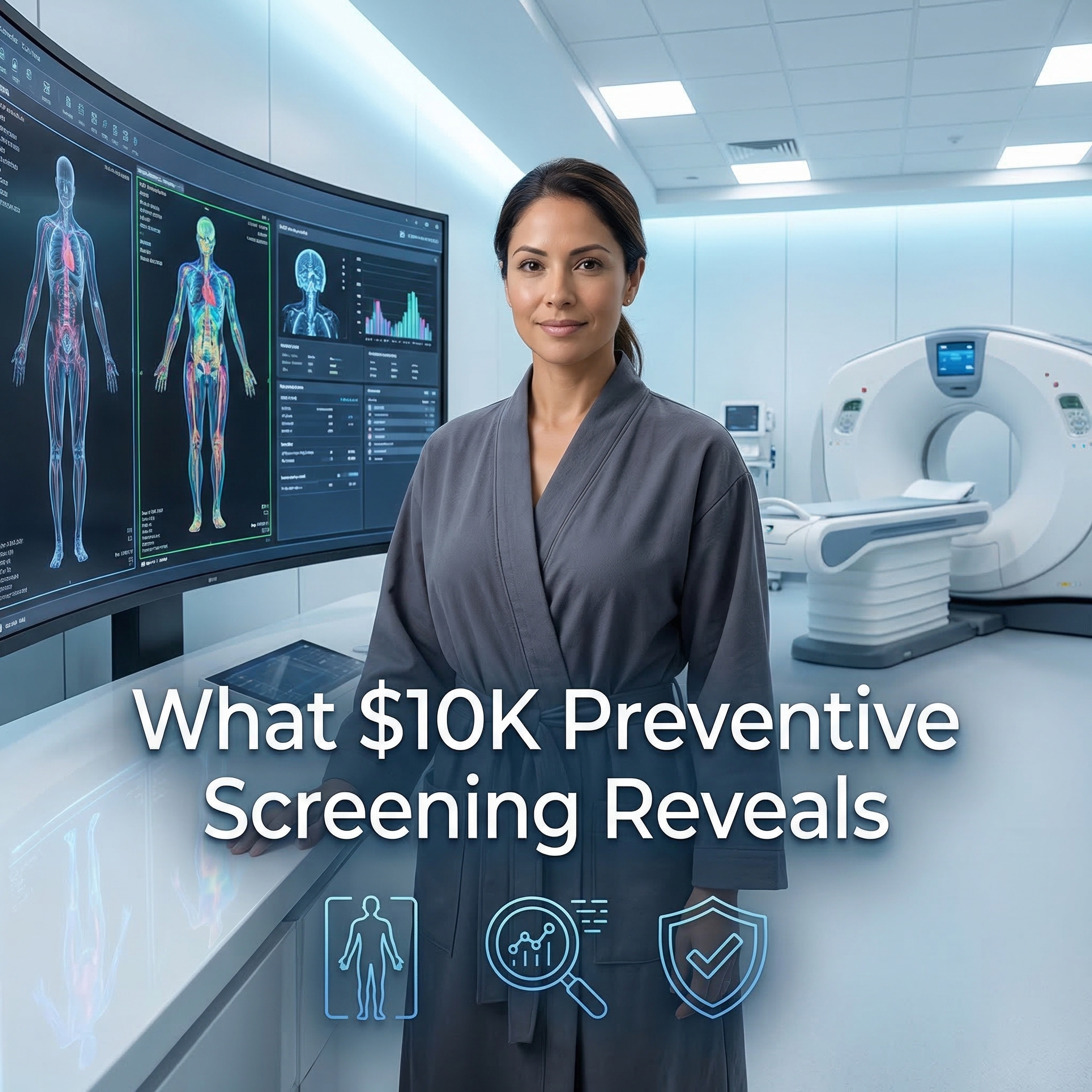
Full body diagnostic screening worth it is a question an increasing number of health-conscious individuals are asking as premium diagnostic companies offer comprehensive testing packages that promise to detect cancer, heart disease, and other conditions years before symptoms appear — at price points that demand serious consideration. #FullBodyDiagnosticScreeningWorthIt
⠀
The rise of comprehensive diagnostic screening represents a fundamental shift in how proactive individuals approach their health. Companies like Fountain Life, Prenuvo, and Human Longevity have built entire business models around the premise that catching disease early — or before it develops at all — is worth a significant upfront investment. Their screening packages, which range from two thousand to over twenty-five thousand dollars annually, include advanced imaging, multi-cancer blood tests, genomic analysis, and cardiovascular assessments that go far beyond what standard preventive care provides. The question every prospective client must answer is whether the potential benefit justifies the cost.
⠀
What Comprehensive Screening Actually Includes
⠀
A typical premium diagnostic package includes several components that are not available through standard insurance-covered preventive care. Full-body MRI scans can detect structural abnormalities, tumors, and organ changes with remarkable sensitivity. Coronary CT angiography reveals calcium deposits and plaque buildup in heart arteries years before they produce symptoms. Multi-cancer early detection blood tests screen for signals from dozens of cancer types simultaneously. Advanced metabolic and hormonal panels measure biomarkers that standard wellness screenings miss entirely.
⠀
Some platforms add whole genome sequencing, which identifies genetic predispositions to hundreds of conditions. Others include DEXA scans for bone density and body composition analysis, advanced cardiac imaging, and cognitive function assessments. The most comprehensive packages integrate all of these data streams into a unified health report reviewed by a team of specialists, creating the kind of thorough baseline that longevity medicine advocates consider the foundation of proactive health management.
⠀
The Case For: Early Detection Saves Lives
⠀
The most powerful argument for comprehensive screening is straightforward: detecting disease early dramatically improves outcomes. Pancreatic cancer discovered at Stage 1 has a five-year survival rate above eighty percent; discovered at Stage 4, it drops below five percent. Coronary artery disease identified before a heart attack can be managed with lifestyle changes and medication; discovered during a cardiac event, it may require emergency surgery and carries significant mortality risk. Early detection transforms the prognosis for virtually every major disease.
⠀
Anecdotal evidence from screening companies is compelling. Fountain Life reports that approximately fourteen percent of their members receive clinically significant findings — conditions that require medical follow-up — during their initial comprehensive screening. For individuals in this fourteen percent, the screening may be quite literally lifesaving. A ten-thousand-dollar screening that detects an asymptomatic cancer or a developing cardiovascular condition provides value that far exceeds its cost.
⠀
The Case Against: False Positives and Overdiagnosis
⠀
As the landscape of full body diagnostic screening worth it continues to evolve, staying informed about the latest developments in full body diagnostic screening worth it becomes increasingly valuable for making evidence-based decisions about your health and financial future.
As the landscape of full body diagnostic screening worth it continues to evolve, staying informed about the latest developments in full body diagnostic screening worth it becomes increasingly valuable for making evidence-based decisions about your health and financial future.
The medical community’s response to comprehensive screening has been more cautious, and for legitimate reasons. The primary concern is the rate of false positives — findings that appear concerning on imaging but turn out to be benign after additional testing, biopsies, or procedures. Full-body MRI scans are highly sensitive, which means they detect many incidental findings — small cysts, benign nodules, anatomical variations — that would never cause health problems but trigger anxiety and sometimes unnecessary invasive follow-up.
⠀
The concept of overdiagnosis is related but distinct. Some cancers detected through screening grow so slowly that they would never cause symptoms or death during a patient’s lifetime. Treating these indolent cancers with surgery, radiation, or chemotherapy exposes the patient to real risks and side effects for a condition that did not need treatment. The balance between catching dangerous diseases early and avoiding the harm of overdiagnosis is a genuine clinical challenge that the screening industry is still working to optimize.
⠀
The Multi-Cancer Early Detection Revolution
⠀
Among the most promising developments in diagnostic screening are multi-cancer early detection blood tests that analyze cell-free DNA and other biomarkers circulating in the bloodstream to screen for signals from multiple cancer types simultaneously. These liquid biopsy technologies can potentially detect cancers that have no current screening method — including pancreatic, ovarian, liver, and esophageal cancers that are typically diagnosed only after symptoms appear, often at advanced stages.
⠀
The clinical validation data for these tests is growing rapidly. Large-scale studies have demonstrated the ability to detect multiple cancer types with reasonable sensitivity and high specificity, though sensitivity varies significantly by cancer type and stage. The technology is particularly strong at detecting later-stage cancers and certain aggressive types, but less reliable for very early-stage and slow-growing tumors. As the technology matures and validation data accumulates, these tests are likely to become standard components of preventive care.
⠀
Coronary Calcium Scoring: The Cardiovascular Game-Changer
⠀
The practical implications of full body diagnostic screening worth it extend far beyond theory, offering actionable insights for anyone committed to long-term wellness.
The practical implications of full body diagnostic screening worth it extend far beyond theory, offering actionable insights for anyone committed to long-term wellness.
If there is a single diagnostic test that provides outsized value relative to its cost, it may be the coronary artery calcium scan. This quick, low-radiation CT scan quantifies the amount of calcified plaque in your coronary arteries, providing a direct measurement of atherosclerotic disease burden. A calcium score of zero is highly reassuring, indicating minimal coronary artery disease. An elevated score prompts aggressive risk factor management that can prevent heart attacks and strokes.
⠀
The CAC scan costs between one hundred and four hundred dollars at most imaging centers and takes less than fifteen minutes. It is not covered by most insurance plans as a screening tool, but the clinical value is supported by extensive research showing that it reclassifies cardiovascular risk more accurately than traditional risk calculators. For individuals over forty, particularly those with borderline risk factors, the CAC scan offers exceptional value and is recommended by many cardiologists and longevity medicine practitioners.
⠀
Who Benefits Most From Comprehensive Screening?
⠀
The cost-benefit calculation for comprehensive screening is not the same for everyone. Individuals with strong family histories of cancer, cardiovascular disease, or neurodegenerative conditions derive more value because their baseline risk of detectable conditions is higher. People over fifty face increasing disease incidence, making screening more productive. Those with complex health profiles — multiple risk factors, prior concerning findings, or occupational exposures — also benefit disproportionately from thorough evaluation.
⠀
For healthy individuals in their thirties or early forties with no family history of early disease, the likelihood of detecting a significant condition is lower, and the risk of false positives generating unnecessary anxiety or procedures is proportionally higher. For this group, a targeted approach — comprehensive bloodwork, genetic risk assessment, and specific screening tests based on personal risk factors — may provide better value than the full diagnostic package.
⠀
The Middle Ground: Building a Smart Screening Strategy
⠀
Rather than choosing between no screening and the most expensive comprehensive package, most individuals are best served by a tiered approach. Start with a thorough baseline that includes comprehensive metabolic and hormonal bloodwork, genetic risk assessment, and a coronary calcium score if you are over forty. These relatively affordable tests provide a strong foundation for understanding your personal risk profile and identifying areas that warrant more intensive investigation.
⠀
Based on your baseline results and risk profile, add targeted advanced screening where it provides the most value. A full-body MRI may be indicated if genetic testing reveals elevated cancer risk. A multi-cancer blood test adds another layer of surveillance for those at higher risk. Cardiac imaging beyond the calcium score may be appropriate if your cardiovascular risk profile is concerning. This personalized approach allocates screening dollars where they are most likely to find actionable results.
⠀
How Insurance Fits Into Your Screening Strategy
⠀
Standard health insurance covers a defined set of preventive screenings based on age and risk factors — mammograms, colonoscopies, standard blood panels, and certain cancer screenings. These insurance-covered screenings should be the starting point for everyone, as they represent the highest-value tests validated by decades of clinical evidence. Maximizing your insurance-covered preventive benefits is the first step in any screening strategy.
⠀
For screening beyond what insurance covers, HSA-eligible plans offer a tax-advantaged way to fund advanced diagnostics. Concierge medicine relationships provide access to physicians who can order and interpret advanced tests, and who can guide your screening strategy based on your individual risk profile rather than population averages. The combination of insurance-covered basics, HSA-funded advanced screening, and concierge medicine guidance creates a comprehensive approach that is both thorough and financially efficient.
⠀
Why This Matters for Your Health Strategy
The conversation around full body diagnostic screening worth it is more relevant than ever. As research into full body diagnostic screening worth it accelerates, individuals who stay informed position themselves to make smarter decisions about their health and coverage. Whether you are just beginning to explore full body diagnostic screening worth it or have been following these developments closely, the evidence suggests that proactive engagement with full body diagnostic screening worth it can yield meaningful benefits over time.
Related Reading from Our Longevity Series
Continue exploring full body diagnostic screening worth it and related longevity topics with these in-depth guides:
- Telemedicine Meets Longevity: Accessing Cutting-Edge Health Optimization from Anywhere
- Your 2027 Health Insurance Roadmap: Aligning Coverage with the Longevity Revolution
- Telomeres Explained: What These Tiny DNA Caps Reveal About How You Age
The Bottom Line: Is It Worth It?
⠀
For individuals with the financial means and a genuine commitment to proactive health management, some form of advanced screening beyond standard preventive care is likely worth the investment — particularly after age forty or with significant risk factors. The specific package and price point should be calibrated to your individual risk profile, family history, and health goals rather than defaulting to either the most or least expensive option.
⠀
The most important factor is what you do with the information. Screening without follow-through is wasted money. A comprehensive screening program is most valuable when paired with a healthcare team — ideally including a concierge physician — who can interpret results in context, recommend evidence-based interventions, and monitor your progress over time. At Curl Insurance Services, we help clients build coverage strategies that support this proactive approach, maximizing insurance benefits while creating a plan for the advanced care that falls outside standard coverage. Text us at (949) 506-2746 to discuss your options.