

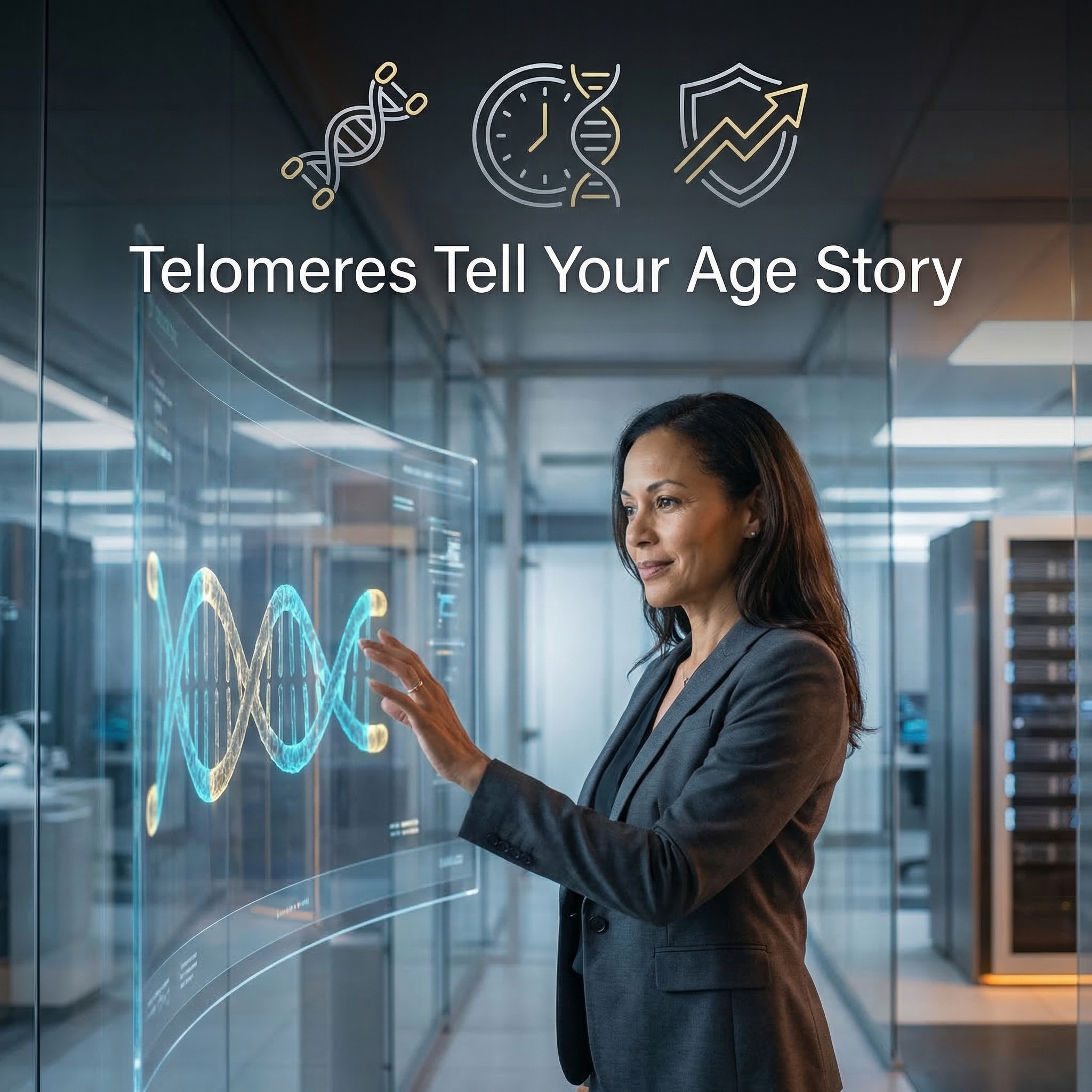
Telomeres Explained: What These Tiny DNA Caps Reveal About How You Age
At the tips of every chromosome in your body sits a protective structure so small it can only be measured in molecular units, yet so consequential that its condition may predict your risk of disease, disability, and premature death. Understanding telomere length aging health has become one of the most accessible entry points into the science of biological aging, offering practical insights into how your daily choices influence the pace at which your cells age. At Curl Insurance Services, we help our clients understand the connections between emerging health science and smart coverage decisions. #TelomereLengthAgingHealth
⠀
What Telomeres Are and Why They Matter
Telomeres are repetitive sequences of DNA that cap the ends of your chromosomes, much like the plastic tips on shoelaces prevent fraying. Every human chromosome — forty-six in total — has telomeres at both ends, consisting of thousands of repeats of a six-nucleotide sequence. These caps do not contain genetic instructions for building proteins or running biological processes. Instead, their role is purely protective: they prevent chromosomes from deteriorating, fusing with neighboring chromosomes, or being mistakenly recognized as damaged DNA that needs to be repaired or destroyed.
⠀
Without functional telomeres, your chromosomes would be vulnerable to degradation every time a cell divides. The essential genetic information encoded in your chromosomes — the blueprint for everything from insulin production to immune function — would be progressively lost. Telomeres serve as expendable buffers, absorbing the inevitable shortening that occurs during cell division so that the critical genetic code within remains intact.
⠀
The Shortening Problem
Here is the fundamental challenge that connects telomeres to aging: every time a cell divides, its telomeres get slightly shorter. The molecular machinery that copies DNA during cell division cannot fully replicate the very ends of chromosomes, resulting in a small loss of telomere length with each replication cycle. This phenomenon, known as the end-replication problem, means that your telomeres are progressively eroding throughout your life.
As the landscape of telomere length aging health continues to evolve, staying informed about the latest developments in telomere length aging health becomes increasingly valuable for making evidence-based decisions about your health and financial future.
As the landscape of telomere length aging health continues to evolve, staying informed about the latest developments in telomere length aging health becomes increasingly valuable for making evidence-based decisions about your health and financial future.
⠀
When telomeres shorten to a critical threshold, cells enter a state called replicative senescence — they permanently stop dividing. These senescent cells do not simply sit quietly. As explored in longevity research, senescent cells secrete inflammatory molecules, growth factors, and tissue-degrading enzymes that damage surrounding healthy tissue. The accumulation of these dysfunctional cells contributes to chronic inflammation, tissue deterioration, and the progression of age-related diseases.
⠀
The rate of telomere shortening is not fixed. While some shortening occurs inevitably with each cell division, the pace is influenced by a complex interplay of genetics, lifestyle factors, environmental exposures, and health behaviors. This variability explains why telomere length varies significantly between individuals of the same chronological age — and why telomere biology has become such an important area of longevity research.
⠀
Telomeres as a Biomarker of Aging
Extensive epidemiological research has established telomere length as a meaningful biomarker of biological aging and health status. While not the only relevant marker — epigenetic clocks, inflammatory markers, and metabolic biomarkers all provide valuable information — telomere length offers unique insights into your cellular aging trajectory.
⠀
Disease Risk Associations: Shorter telomere length has been consistently associated with increased risk of cardiovascular disease, type 2 diabetes, certain cancers, neurodegenerative conditions, and all-cause mortality. These associations hold even after controlling for conventional risk factors like smoking, obesity, and family history — suggesting that telomere length captures aging-related risk that other measurements miss.
⠀
Functional Aging: Beyond disease risk, telomere length correlates with functional measures of aging including immune competence, cognitive performance, physical capacity, and wound healing ability. Individuals with longer telomeres for their age tend to demonstrate better functional capacity across these domains, supporting the idea that telomere length reflects the overall biological vitality of the organism.
⠀
Individual Variation: The range of telomere lengths within any age group is substantial. A sixty-year-old with well-maintained telomeres may have telomere lengths comparable to the average forty-five-year-old, while a sixty-year-old with accelerated shortening may have telomeres more typical of someone in their seventies. This individual variation is precisely what makes telomere measurement informative — it reveals your position within the spectrum of biological aging rather than simply confirming your birth date.
⠀
The Telomerase Factor
Your body is not entirely defenseless against telomere shortening. An enzyme called telomerase can add telomeric sequences back onto chromosome ends, partially counteracting the shortening that occurs during cell division. Telomerase was discovered by Elizabeth Blackburn, Carol Greider, and Jack Szostak — a breakthrough that earned them the Nobel Prize in Physiology or Medicine in 2009.
The practical implications of telomere length aging health extend far beyond theory, offering actionable insights for anyone committed to long-term wellness.
The practical implications of telomere length aging health extend far beyond theory, offering actionable insights for anyone committed to long-term wellness.
⠀
However, telomerase activity is not uniform across all cell types. Stem cells and certain immune cells maintain relatively high telomerase activity, preserving their ability to divide and replenish tissue throughout life. Most adult somatic cells, however, have low or undetectable telomerase activity, leaving their telomeres to shorten progressively with each division. This differential expression of telomerase explains why some tissue compartments age more rapidly than others and why stem cell health is so central to maintaining organ function over time.
⠀
The relationship between telomerase and cancer is an important nuance. Cancer cells typically reactivate telomerase to enable unlimited cell division — one of the hallmarks of malignancy. This dual nature of telomerase — protective in healthy cells, potentially dangerous when dysregulated — has complicated efforts to develop telomerase-activating therapies. Any intervention that boosts telomerase activity must do so in a controlled, cell-specific manner to avoid inadvertently promoting cancer growth.
⠀
Lifestyle Factors That Protect Your Telomeres
Perhaps the most practically valuable aspect of telomere research is its clear demonstration that lifestyle choices measurably influence telomere maintenance. These findings provide concrete, actionable strategies for protecting your cellular health — strategies that do not require pharmaceutical intervention or advanced medical technology.
⠀
Exercise: Regular physical activity is one of the most consistently demonstrated protectors of telomere length. Individuals who maintain regular exercise habits over years and decades consistently show longer telomeres than sedentary peers. Both cardiovascular exercise and resistance training contribute, with moderate, consistent activity appearing more protective than occasional extreme exertion. The mechanisms likely involve reduced chronic inflammation, improved oxidative stress management, enhanced immune function, and potentially increased telomerase activity in immune cells.
⠀
Nutrition: Dietary patterns rich in antioxidants, omega-3 fatty acids, and plant-based nutrients are associated with longer telomeres. Mediterranean-style diets — emphasizing vegetables, fruits, whole grains, fish, and healthy fats — have shown particularly strong associations with telomere preservation. Conversely, diets high in processed foods, refined sugars, and inflammatory fats are associated with accelerated telomere shortening. Adequate intake of specific nutrients including vitamin D, folate, and zinc appears to support telomere maintenance, likely through their roles in DNA repair and antioxidant defense.
⠀
Stress Management: Chronic psychological stress is one of the most potent accelerators of telomere shortening. Groundbreaking research by Dr. Elissa Epel and Dr. Elizabeth Blackburn demonstrated that individuals experiencing chronic caregiving stress had significantly shorter telomeres and lower telomerase activity than age-matched controls. Subsequent studies have confirmed that perceived stress, depression, anxiety, and adverse childhood experiences all correlate with accelerated telomere erosion. Mind-body practices including meditation, yoga, and cognitive behavioral stress management have shown measurable positive effects on both telomere length and telomerase activity.
⠀
Sleep: Sleep quality and duration influence telomere maintenance through multiple pathways. Chronic short sleep — consistently sleeping fewer than six hours — is associated with shorter telomeres independent of other risk factors. The mechanisms involve disrupted cortisol rhythms, increased inflammatory signaling, impaired cellular repair processes, and compromised immune function. Prioritizing consistent, restorative sleep of seven to nine hours supports the biological processes that maintain telomere integrity.
⠀
Environmental Factors: Exposure to cigarette smoke, air pollution, industrial chemicals, and excessive ultraviolet radiation accelerates telomere shortening through oxidative damage and inflammatory activation. While some exposures are difficult to avoid entirely, awareness and reasonable mitigation — choosing cleaner air environments, using sun protection, avoiding tobacco — contribute measurably to telomere preservation over a lifetime.
⠀
Telomere Testing: What Is Available
Several commercial and clinical testing options now exist for measuring telomere length, making this biomarker accessible to health-conscious individuals who want to understand their biological aging status.
⠀
Consumer Testing: Direct-to-consumer telomere tests are available from various companies, typically requiring a blood draw or saliva sample. These tests generally report your average telomere length and compare it to population norms for your age group, providing a percentile ranking that indicates whether your telomeres are longer, shorter, or typical for someone your age. Consumer tests offer a useful starting point for understanding your telomere status, though their precision and methodology vary between providers.
⠀
Clinical Testing: Physician-ordered telomere testing through clinical laboratories typically offers higher-precision measurements using validated methodologies. Within concierge medicine practices, telomere testing is often incorporated into comprehensive annual assessments alongside epigenetic age testing, metabolic panels, and inflammatory biomarkers. The clinical context allows your physician to interpret telomere results alongside your complete health picture, providing more actionable insights than a standalone consumer test.
⠀
Interpreting Results: Telomere length is most informative when tracked over time rather than interpreted from a single measurement. A single test tells you where you stand today, but serial measurements reveal your trajectory — whether your telomeres are shortening at an average, accelerated, or decelerated rate. This trajectory information is far more actionable than a point-in-time measurement, as it indicates whether your current health behaviors are effectively protecting your cellular aging or whether adjustments are needed.
⠀
The Hype vs. Reality of Telomere Therapies
The importance of telomeres in aging biology has predictably attracted commercial interest in telomere-extending therapies and supplements. Evaluating these claims honestly helps you invest your health resources wisely.
⠀
Supplement Claims: Various supplements are marketed as telomere-protective or telomerase-activating, including TA-65, astragalus extracts, and various antioxidant formulations. While some of these compounds have shown modest effects on telomerase activity in cell culture or small human studies, the evidence for clinically meaningful telomere extension from oral supplementation remains limited. No supplement has been convincingly demonstrated to produce the kind of substantial telomere lengthening that would meaningfully reverse biological aging in humans.
⠀
Lifestyle vs. Supplements: The scientific evidence overwhelmingly favors comprehensive lifestyle optimization over supplementation for telomere protection. The combined effect of regular exercise, a nutrient-dense diet, effective stress management, adequate sleep, and environmental awareness produces telomere-protective effects that far exceed anything demonstrated by individual supplements. Investing in these foundational behaviors represents a far more evidence-based approach to telomere health than purchasing supplements with limited clinical support.
⠀
Emerging Therapies: Gene therapy approaches to telomerase activation and epigenetic reprogramming strategies that restore youthful telomere maintenance represent the most scientifically promising avenues for future telomere-based interventions. These approaches are still in early-stage research, but they address telomere biology at a more fundamental level than oral supplements can achieve.
⠀
Telomeres in the Broader Aging Picture
It is important to understand that telomere length is one piece of the biological aging puzzle, not the entire picture. While telomere shortening contributes to aging, it operates alongside other mechanisms including epigenetic information loss, mitochondrial dysfunction, stem cell depletion, chronic inflammation, and cellular senescence. These mechanisms interact with and amplify each other in complex ways.
⠀
A comprehensive approach to longevity monitoring incorporates telomere assessment alongside other biomarkers — epigenetic age, inflammatory markers, metabolic parameters, cardiovascular imaging, and functional assessments — to create a multidimensional picture of biological aging. This integrated approach, typically available through concierge medicine practices, provides the most actionable and complete understanding of your aging trajectory.
⠀
Why This Matters for Your Health Strategy
The conversation around telomere length aging health is more relevant than ever. As research into telomere length aging health accelerates, individuals who stay informed position themselves to make smarter decisions about their health and coverage. Whether you are just beginning to explore telomere length aging health or have been following these developments closely, the evidence suggests that proactive engagement with telomere length aging health can yield meaningful benefits over time.
Related Reading from Our Longevity Series
Continue exploring telomere length aging health and related longevity topics with these in-depth guides:
- The Optimal Diet for Longevity: What the Top Experts Actually Recommend
- The Four Pillars of Physical Longevity: A Science-Based Exercise Framework
- Telemedicine Meets Longevity: Accessing Cutting-Edge Health Optimization from Anywhere
Coverage for Proactive Aging Assessment
Telomere testing and comprehensive aging biomarker panels are generally not covered by standard health insurance, as they are considered elective rather than diagnostically necessary by most insurers. These services are most reliably accessed through concierge medicine memberships, where they form part of comprehensive annual health optimization assessments.
⠀
At Curl Insurance Services, we help clients across Arizona, Florida, Georgia, Louisiana, Michigan, North Carolina, Ohio, South Carolina, and Texas build coverage strategies that support proactive health assessment and optimization. By combining foundation health insurance with concierge medicine access, accident insurance, dental and vision coverage, and strategic Health Savings Account planning, we create comprehensive coverage that keeps advanced health monitoring within reach.
⠀
The Kaiser Family Foundation has documented the increasing consumer demand for preventive and proactive health services — a trend that makes forward-thinking coverage planning more valuable than ever.
⠀
Text us at (949) 506-2746 to explore coverage strategies that support your proactive approach to aging well. Our advisors at Curl Insurance Services design comprehensive coverage solutions that align with your commitment to understanding and optimizing your biological health.
⠀