
Biohacking technologies evidence ranked 2026 gives you a clear, science-based framework for evaluating the growing landscape of optimization tools — helping you invest wisely in the technologies that deliver real results and avoid those that are mostly marketing. #BiohackingTechnologiesEvidenceRanked2026
⠀
The biohacking technology market has exploded into a multi-billion-dollar industry, and with that growth has come an overwhelming mix of genuine innovation, promising early-stage research, and outright marketing hype. For health-conscious individuals who want to invest in their longevity, separating evidence from enthusiasm is essential. This comprehensive ranking evaluates the most popular biohacking technologies through the lens of published research, clinical evidence, and expert consensus as of 2026.
⠀
Tier 1: Strong Evidence — Invest With Confidence
⠀
These technologies have substantial clinical evidence supporting their benefits, are widely used in medical settings, and carry well-understood risk profiles. They represent the highest-confidence investments in your health optimization toolkit.
⠀
Continuous Glucose Monitors (CGMs)
⠀
Originally developed for diabetes management, continuous glucose monitors have become one of the most impactful biohacking tools available. By providing real-time data on how your body responds to specific foods, exercise, stress, and sleep, CGMs transform nutrition from guesswork into precision science. The data reveals your individual glycemic responses — which can vary dramatically between people eating identical meals — and empowers you to make dietary choices based on your unique biology.
⠀
The evidence base for CGM use in metabolic health optimization is robust. Studies show that people who use CGMs make measurably better dietary choices, reduce glucose variability, and improve metabolic markers over time. Companies like Levels and Nutrisense have made CGMs accessible to non-diabetic health optimizers, though the sensors still require a prescription in most states. At roughly one hundred fifty to three hundred dollars per month, CGMs offer exceptional value for the quality of data they provide.
⠀
Wearable Health Trackers (Advanced Tier)
⠀
As the landscape of biohacking technologies evidence ranked 2026 continues to evolve, staying informed about the latest developments in biohacking technologies evidence ranked 2026 becomes increasingly valuable for making evidence-based decisions about your health and financial future.
As the landscape of biohacking technologies evidence ranked 2026 continues to evolve, staying informed about the latest developments in biohacking technologies evidence ranked 2026 becomes increasingly valuable for making evidence-based decisions about your health and financial future.
Advanced wearables like the WHOOP band, Oura Ring, and Apple Watch Ultra have matured beyond simple step counting into legitimate health monitoring platforms. Heart rate variability tracking provides insights into recovery status and autonomic nervous system balance. Sleep stage estimation, while not as accurate as polysomnography, offers valuable trend data for optimizing sleep protocols. Blood oxygen monitoring can screen for potential sleep apnea and respiratory issues.
⠀
The evidence supporting wearable-guided health optimization continues to strengthen, with studies showing that people who use HRV-guided training make better recovery decisions and those who track sleep metrics improve their sleep hygiene more consistently. The investment of two hundred to five hundred dollars for a quality device, with minimal ongoing costs, makes advanced wearables one of the best values in biohacking technology.
⠀
Tier 2: Promising Evidence — Worth Exploring
⠀
These technologies show meaningful benefits in published research but may have smaller study sizes, shorter follow-up periods, or more variable individual responses. They are reasonable investments for health optimizers who have already established strong foundations.
⠀
Red and Near-Infrared Light Therapy (Photobiomodulation)
⠀
The practical implications of biohacking technologies evidence ranked 2026 extend far beyond theory, offering actionable insights for anyone committed to long-term wellness.
The practical implications of biohacking technologies evidence ranked 2026 extend far beyond theory, offering actionable insights for anyone committed to long-term wellness.
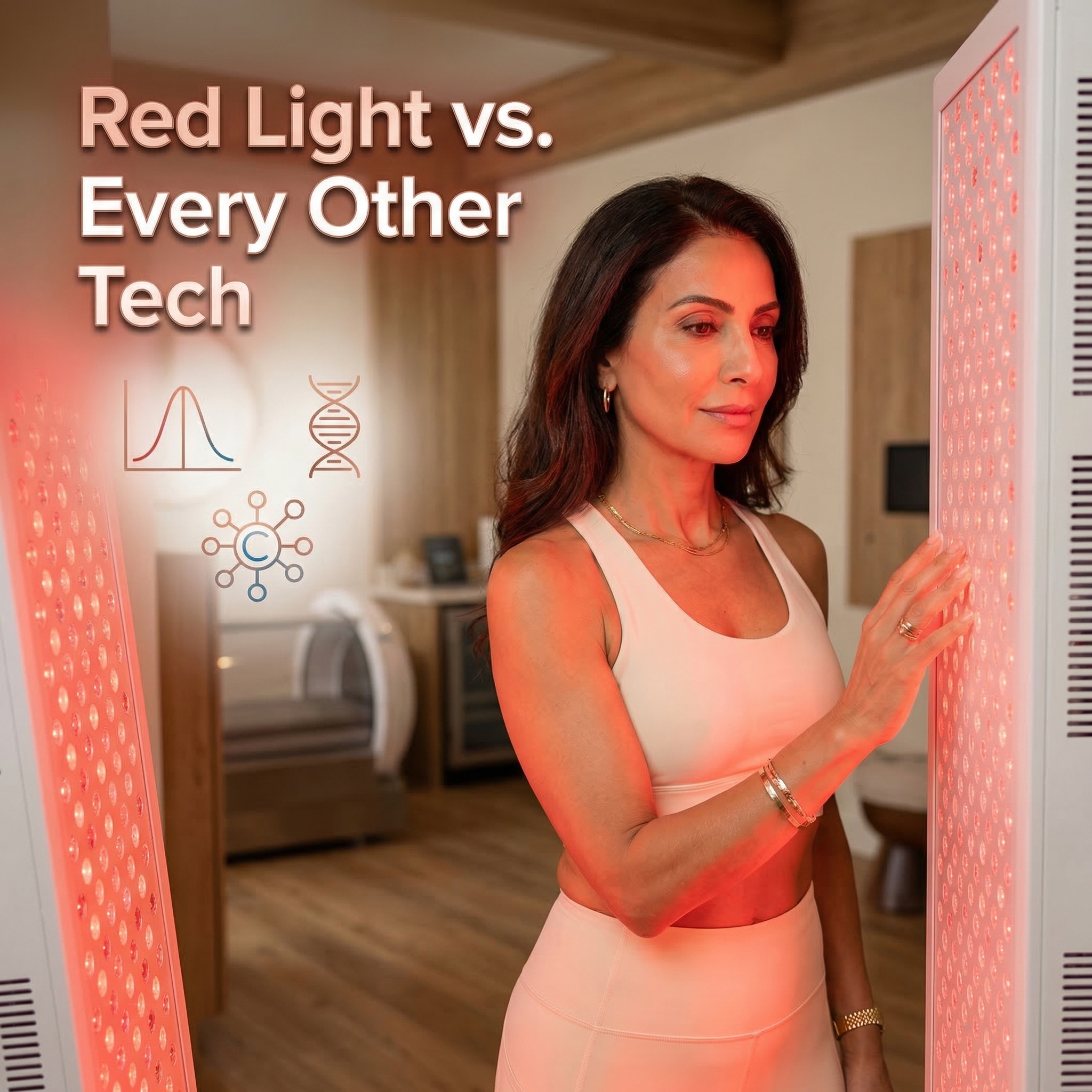
Photobiomodulation — the use of specific wavelengths of red (approximately 630-670nm) and near-infrared (approximately 810-850nm) light to stimulate cellular energy production — has accumulated a growing body of evidence for skin health, wound healing, joint pain reduction, and muscle recovery. The mechanism involves stimulation of cytochrome c oxidase in mitochondria, enhancing ATP production and reducing oxidative stress at the cellular level.
⠀
The evidence for skin rejuvenation and collagen production is the strongest, with multiple randomized controlled trials showing improvements in wrinkles, skin elasticity, and complexion. Research on joint pain and muscle recovery is also positive, though effect sizes vary. Claims about cognitive enhancement and systemic anti-aging effects remain earlier in the evidence development process. Quality devices range from three hundred to several thousand dollars, with panel-style units offering the best coverage for full-body treatment.
⠀
Hyperbaric Oxygen Therapy (HBOT)
⠀
Hyperbaric oxygen therapy — breathing pure oxygen in a pressurized chamber — has strong evidence for specific medical conditions including wound healing, decompression sickness, and carbon monoxide poisoning. Its application in longevity and anti-aging is more recent but increasingly supported by research. A notable 2020 study from Tel Aviv University showed that HBOT could lengthen telomeres and reduce senescent cell accumulation in aging adults — two biomarkers closely associated with biological aging.
⠀
The challenge with HBOT is accessibility and cost. Clinical HBOT sessions typically range from two hundred to four hundred dollars each, and meaningful protocols require twenty to forty sessions. Home-use soft chambers operate at lower pressures and may not replicate the clinical benefits. For those with the budget and access, HBOT is one of the more interesting emerging longevity technologies, but it remains expensive and time-intensive compared to other options.
⠀
At-Home Blood Testing Platforms
⠀
Companies offering comprehensive at-home blood testing have democratized access to advanced biomarker data. Platforms providing panels that include inflammatory markers, metabolic health indicators, hormone levels, and nutrient status give individuals the power to track their biology over time without needing a physician visit for every draw. The convenience of finger-prick or at-home phlebotomy services combined with digital dashboards for tracking trends makes this category highly practical.
⠀
The evidence supporting biomarker-guided health optimization is strong in principle — we know that tracking markers like fasting insulin, C-reactive protein, and lipid particles provides actionable health information. The platform-specific evidence varies, with some companies offering more comprehensive panels and better physician review than others. Expect to spend one hundred to five hundred dollars per test depending on the comprehensiveness of the panel.
⠀
Tier 3: Early Stage — Approach With Caution
⠀
These technologies have some theoretical basis and early research support but lack the evidence depth to justify confident recommendation. They may prove valuable as research matures, but current users are essentially early adopters accepting higher uncertainty.
⠀
Peptide Therapies
⠀
Peptides like BPC-157 for tissue healing, thymosin alpha-1 for immune modulation, and various growth hormone-releasing peptides have generated significant interest in the biohacking community. Animal studies for several peptides show impressive results, and anecdotal reports from human users are often enthusiastic. However, human clinical trial data remains limited for most peptides used in longevity and performance contexts, and the regulatory landscape is evolving rapidly.
⠀
The primary concerns with peptide therapies are quality control and safety monitoring. Sourcing pharmaceutical-grade peptides requires working with reputable compounding pharmacies, and proper dosing and administration require physician oversight. While the therapeutic potential is real, the current evidence base does not support the level of confidence that social media enthusiasm might suggest. If pursuing peptide therapy, do so under the supervision of a knowledgeable physician, ideally through a concierge medicine practice with experience in this area.
⠀
NAD+ Infusions and Precursors
⠀
NAD+ supplementation, whether through intravenous infusion or oral precursors like NMN and NR, aims to restore declining levels of this essential coenzyme that plays a critical role in cellular energy production and DNA repair. The theoretical foundation is strong — NAD+ levels do decline with age, and this decline is associated with metabolic dysfunction and accelerated aging. Animal studies have shown impressive benefits from NAD+ restoration.
⠀
However, human evidence remains mixed. While some studies show improvements in specific biomarkers with oral precursors, the clinical significance of these changes is debated. IV NAD+ infusions are expensive — typically five hundred to one thousand dollars per session — and the evidence that they provide benefits beyond what oral supplementation achieves is limited. This is an area where the science is promising but not yet conclusive enough to justify the premium pricing that many clinics charge.
⠀
Tier 4: Mostly Marketing — Save Your Money
⠀
These technologies have minimal scientific support relative to their marketing claims. While some may eventually prove valuable, the current evidence does not justify their cost, and consumers should approach them with healthy skepticism.
⠀
Alkaline Water Systems
⠀
Despite aggressive marketing claiming benefits for everything from cancer prevention to anti-aging, alkaline water lacks meaningful scientific support for health optimization. Your body maintains blood pH within an extremely narrow range through powerful buffering systems, and the pH of the water you drink has virtually no effect on systemic acid-base balance. While staying well-hydrated is certainly important for health, paying premium prices for alkaline water provides no measurable advantage over filtered tap water.
⠀
Detox and Cleanse Programs
⠀
Your liver and kidneys are extraordinarily effective detoxification systems, and there is no credible evidence that commercial detox programs, juice cleanses, or foot detox pads provide additional benefit. The weight loss experienced during liquid cleanses is primarily water and glycogen depletion, which reverses immediately upon resuming normal eating. Some detox programs may actually be harmful by depriving the body of essential nutrients during the cleanse period.
⠀
Making Smart Biohacking Investments
⠀
The most effective approach to biohacking technology is to build from the strongest evidence outward. Start with Tier 1 technologies that provide the best data for the lowest cost — a quality wearable and periodic comprehensive bloodwork form an excellent foundation. Add Tier 2 technologies like red light therapy once your foundations are solid and you have the budget. Approach Tier 3 technologies as informed experiments rather than proven solutions, always under physician guidance.
⠀
Before investing in any biohacking technology, ensure that your foundational health practices — sleep, nutrition, exercise, stress management, and social connection — are genuinely optimized. No technology can compensate for poor fundamentals, and the return on investment from improving basics almost always exceeds the return from adding advanced technologies to a weak foundation.
⠀
The Insurance and Coverage Perspective
⠀
Most biohacking technologies fall outside traditional insurance coverage, which creates a real financial planning consideration for health optimizers. CGMs may be partially covered with a physician’s prescription documenting metabolic health concerns. Blood testing through in-network laboratories often receives better coverage than direct-to-consumer platforms. Hyperbaric oxygen therapy may be covered for approved medical indications but rarely for longevity purposes.
⠀
HSA-eligible high-deductible health plans offer the most flexible approach, allowing you to set aside pre-tax dollars for many biohacking-related expenses. Concierge medicine memberships, which provide the physician oversight that makes advanced biohacking both safer and more effective, can sometimes be partially funded through HSA accounts. At Curl Insurance Services, we help clients navigate these coverage options to build strategies that support their health optimization goals while maximizing their insurance benefits. Text us at (949) 506-2746 to discuss your options.
⠀
Why This Matters for Your Health Strategy
The conversation around biohacking technologies evidence ranked 2026 is more relevant than ever. As research into biohacking technologies evidence ranked 2026 accelerates, individuals who stay informed position themselves to make smarter decisions about their health and coverage. Whether you are just beginning to explore biohacking technologies evidence ranked 2026 or have been following these developments closely, the evidence suggests that proactive engagement with biohacking technologies evidence ranked 2026 can yield meaningful benefits over time.
Related Reading from Our Longevity Series
Continue exploring biohacking technologies evidence ranked 2026 and related longevity topics with these in-depth guides:
- Digital Health Twins: How AI Models of Your Body Will Predict Disease Before It Starts
- What Happens When Everyone Lives to 100? Society, Work, and the New Normal
- Epigenetic Age Testing: How Old Is Your Body Really?
The Biohacking Landscape Will Keep Evolving
⠀
The pace of innovation in health technology ensures that today’s rankings will shift as new evidence emerges. Technologies currently in Tier 3 may build stronger evidence bases and move up. New technologies not yet on the market may leapfrog existing options entirely. The principles for evaluating them, however, remain constant: look for published, peer-reviewed evidence; understand the mechanism of action; consider the cost relative to the strength of evidence; and always prioritize technologies that complement rather than replace foundational health practices. Your longevity is worth investing in — just make sure you are investing wisely.