

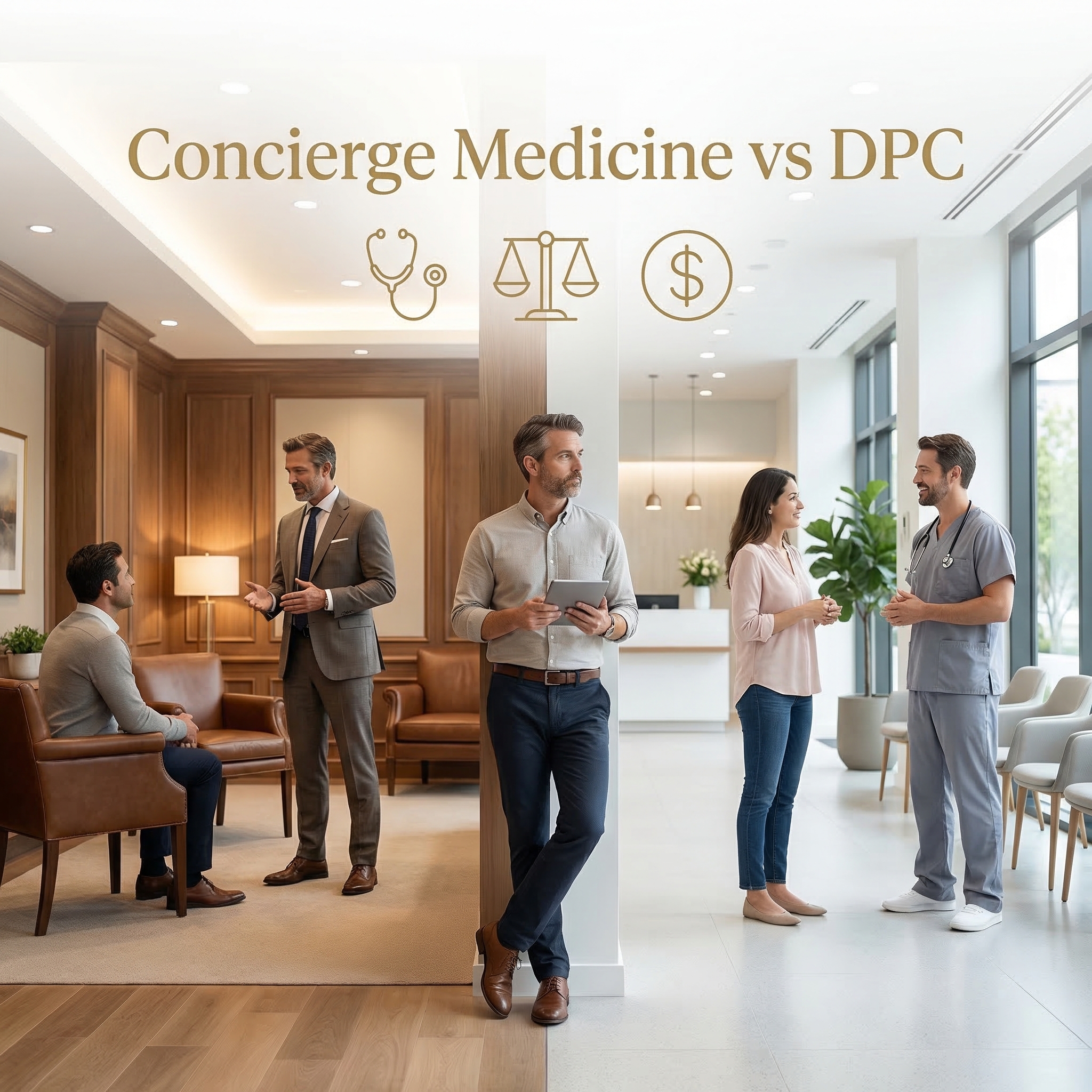
Concierge medicine vs DPC is a comparison that matters more than ever as membership-based healthcare models reshape how Americans access premium primary care. #ConciergeMedicineVsDPC Both concierge medicine and direct primary care offer an escape from the overcrowded, time-pressured conventional healthcare system — but they achieve this through meaningfully different structures, pricing models, and service philosophies. Understanding what distinguishes these two approaches helps you select the model that genuinely matches your expectations, health needs, and lifestyle.
⠀
The growing popularity of both models reflects widespread dissatisfaction with traditional healthcare. Patients want more time with their doctors. They want same-day appointments. They want a physician who knows them as a person rather than a chart number. Both concierge medicine and direct primary care deliver on these desires, but they do so in distinct ways that affect cost, scope, and the overall care experience.
⠀
Understanding the Core Difference Between Concierge Medicine and DPC
⠀
The fundamental structural difference in the concierge medicine vs DPC comparison centers on insurance participation. This single distinction cascades through every aspect of how care is delivered, priced, and experienced.
⠀
Concierge medicine practices typically continue to accept and bill health insurance for covered services. Your membership fee — paid annually or monthly — covers enhanced access, extended appointments, and additional services beyond what insurance reimburses. When you visit your concierge physician, the practice bills your insurance for the clinical visit while your membership fee covers the premium experience layer.
⠀
Direct primary care practices operate entirely outside the insurance system. Your monthly or annual membership fee covers all primary care services directly — office visits, basic lab work, certain procedures, and physician access. No insurance is billed, no claims are filed, and no insurance company sits between you and your doctor. The DPC model eliminates insurance overhead entirely, which reduces administrative costs and allows practices to charge lower membership fees.
⠀
This structural difference shapes every subsequent aspect of the concierge medicine vs DPC comparison: pricing, service scope, patient demographics, and the overall care philosophy.
⠀
Cost Comparison: What You Pay Under Each Model
⠀
Pricing represents one of the most significant distinctions when evaluating concierge medicine vs DPC, and understanding the full cost picture requires looking beyond the membership fee alone.
⠀
Direct primary care memberships typically range from seventy-five to two hundred dollars per month (nine hundred to twenty-four hundred dollars annually). This fee covers all primary care services, and because no insurance is involved, the pricing is transparent and predictable. What you pay is what you pay — no copays, no deductibles, no surprise bills for primary care visits.
⠀
Concierge medicine memberships typically range from two thousand to fifteen thousand dollars per year, with premium executive programs reaching twenty thousand dollars or more. This higher fee reflects additional services beyond basic primary care: comprehensive executive physicals, advanced diagnostic testing, house calls, specialist coordination, wellness coaching, and concierge-level service infrastructure.
⠀
However, the total healthcare cost comparison is more nuanced. Concierge patients still use their health insurance for covered services, which means insurance reimburses a portion of clinical care costs. DPC patients pay their membership but still need a separate health insurance policy for hospitalizations, specialist care, and other non-primary-care needs. When you factor in insurance premiums, copays, and the membership fee, the total annual healthcare spend under each model may be closer than the membership fees alone suggest.
⠀
Service Scope and Depth: What Each Model Delivers
⠀
The services included in each membership tier represent a critical dimension of the concierge medicine vs DPC evaluation. While both models prioritize time, access, and relationship quality, the breadth and depth of included services often differ substantially.
⠀
Direct primary care excels at delivering core primary care services without insurance complexity. Typical DPC memberships include unlimited office visits, basic lab work (often blood panels, metabolic screens, and common diagnostic tests), minor procedures (suturing, joint injections, skin biopsies), telehealth consultations, and direct physician communication. The focus is on accessible, relationship-driven primary care at a fair price.
⠀
Concierge medicine typically offers everything DPC provides plus a layer of premium services. Executive-level annual physicals with advanced cardiac imaging, cancer screening panels, genetic testing, and biomarker analysis. In-home medical visits. Coordination with top specialists and expedited referrals. Wellness programs including nutrition, fitness, and longevity optimization. Some practices include IV therapy, aesthetic medicine, and travel health services. The concierge model positions itself as comprehensive health management — not just primary care.
⠀
In the concierge medicine vs DPC comparison, the service scope question often reflects the patient’s expectations. If you want excellent, accessible primary care at a reasonable price, DPC delivers exceptional value. If you want a comprehensive health management experience with white-glove service and advanced diagnostics, concierge medicine matches those expectations.
⠀
Physician Access and Availability
⠀
Both models dramatically improve physician access compared to traditional practice, but the specific access structure differs in ways that matter to patients.
⠀
DPC physicians typically maintain patient panels of four hundred to eight hundred patients, compared to two thousand or more in traditional practices. This smaller panel size enables same-day or next-day appointments, longer visits (typically thirty to sixty minutes), and direct communication via phone, text, or secure messaging. Most DPC physicians are available during business hours with some after-hours access for urgent matters.
⠀
Concierge physicians often maintain even smaller panels — sometimes as few as two hundred to four hundred patients at the premium level. This ultra-small panel enables true twenty-four-seven physician access, including personal cell phone or direct text availability for established patients. House calls, evening availability, and immediate response to health concerns are standard features rather than occasional accommodations.
⠀
When evaluating concierge medicine vs DPC on access, consider your actual needs. If same-day appointments and direct physician communication during business hours satisfy your requirements, DPC provides excellent access at a lower price point. If you need round-the-clock availability, house calls, and a physician who functions almost as a personal health consultant, the concierge model’s deeper access justifies its higher membership fee.
⠀
The Insurance Question: A Practical Consideration
⠀
How each model interacts with health insurance creates practical implications that affect your total healthcare strategy.
⠀
Because DPC operates outside insurance, your visits and services are not billed to insurance and do not count toward your deductible. This means DPC members often pair their membership with a high-deductible health plan (HDHP) for catastrophic coverage — paying lower premiums on the insurance side while using DPC for day-to-day primary care. This pairing can create significant savings for generally healthy individuals and families.
⠀
Concierge medicine’s continued insurance participation means your covered visits do count toward deductibles and out-of-pocket maximums. This can be advantageous if you have significant healthcare needs beyond primary care, as the insurance reimbursement from concierge visits contributes to reaching your deductible threshold faster.
⠀
In the concierge medicine vs DPC comparison, the optimal insurance strategy depends on your overall healthcare utilization. Light healthcare users may save money with DPC plus a high-deductible plan. Heavy healthcare users may benefit from concierge medicine’s insurance integration, which maximizes reimbursement across all care settings.
⠀
Patient Demographics and Practice Culture
⠀
The patient demographics attracted to each model create distinct practice cultures that affect the overall experience.
⠀
DPC practices tend to attract a broad demographic — from young professionals seeking better primary care to families wanting accessible pediatric services to small business owners tired of insurance complexity. The DPC culture emphasizes accessibility, value, and a return to relationship-based medicine for everyone.
⠀
Concierge medicine practices tend to attract affluent professionals, executives, and families who prioritize premium service and comprehensive health management. The culture emphasizes exclusivity, thoroughness, and a white-glove healthcare experience. Concierge patients typically expect — and receive — a level of service comparable to other premium services in their lives.
⠀
Neither culture is better in absolute terms. The concierge medicine vs DPC decision often comes down to which practice philosophy resonates with your personal expectations for healthcare interaction.
⠀
Specialist Coordination and Care Navigation
⠀
When you need care beyond what your primary physician provides, the concierge medicine vs DPC comparison reveals differences in how each model handles referrals and specialist access.
⠀
DPC physicians handle referrals but typically rely on standard referral channels. You may still experience waiting periods for specialist appointments, and the DPC physician’s ability to expedite access depends on their personal professional network rather than institutional relationships.
⠀
Concierge medicine often includes dedicated care coordination as a core service. Concierge practices maintain relationships with top specialists and can frequently arrange appointments within days rather than weeks. Some practices provide a care coordinator who manages the referral process, transfers records, and ensures continuity between your primary physician and specialists. For patients who value having their healthcare orchestrated rather than self-managed, this coordination represents significant added value.
⠀
Making Your Decision: Which Model Fits Your Life
⠀
The concierge medicine vs DPC decision ultimately depends on what you value most in healthcare and what you are willing to invest to get it.
⠀
Choose DPC if you want excellent primary care with transparent pricing, are comfortable managing specialist referrals independently, prefer a lower membership cost, and value the simplicity of an insurance-free primary care relationship. DPC delivers outstanding value for health-conscious individuals who want better than average care without the premium price tag.
⠀
Choose concierge medicine if you want comprehensive health management beyond basic primary care, value executive-level diagnostics and wellness programs, need twenty-four-seven physician access with house call availability, and prefer a practice that coordinates your entire healthcare experience. Concierge medicine delivers a premium experience for individuals who view healthcare as an investment deserving of the same quality they expect in every other aspect of their lives.
⠀
Curl Insurance Services helps clients evaluate both concierge medicine and DPC options, matching your health priorities, lifestyle, and budget with the model that delivers the best value for your specific situation. We work with leading practices in both categories and can guide you toward the right choice.
⠀
Elevate Your Healthcare Experience
⠀
Whether you choose concierge medicine or direct primary care, both models represent a meaningful upgrade from the conventional healthcare experience. The right choice depends on your individual needs, preferences, and definition of value.
⠀
Ready to explore your options? Text us at (949) 506-2746 or visit curlinsuranceservices.com/concierge-medicine to discuss which healthcare model fits your lifestyle and discover membership options that transform how you experience medical care.