

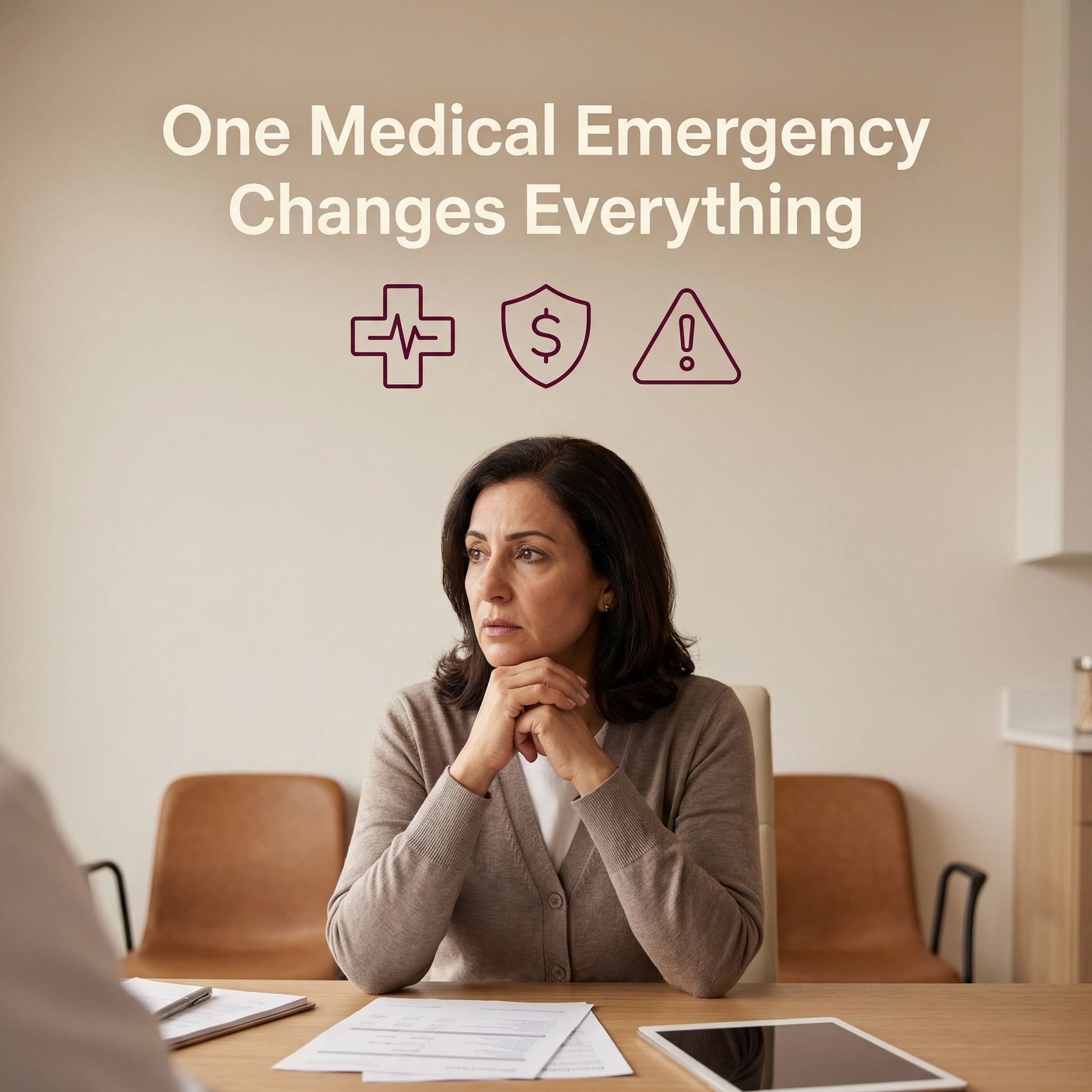
The True Cost of Going Uninsured: Why Gap Coverage Is Non-Negotiable
Every year, millions of Americans face a sobering reality: a single health emergency can derail their financial future. When you don’t have health insurance, medical expenses don’t disappearâthey transform into debt, medical liens, and years of financial consequences. Understanding the cost of being uninsured in America isn’t about fear; it’s about informed financial planning. #CostOfBeingUninsured The data is compelling, and the math is undeniable. Let’s explore what medical care actually costs without coverage and why short-term medical insurance isn’t just a safety netâit’s a financial necessity.
â
The Uninsured Crisis: By The Numbers
The scope of America’s uninsured population is staggering. According to the U.S. Department of Health & Human Services, millions of Americans remain without health insurance coverage despite the availability of plans through the Affordable Care Act marketplace and employer-sponsored options. In the nine states where Curl Insurance Services operatesâArizona, Florida, Georgia, Louisiana, North Carolina, South Carolina, Texas, Michigan, and Ohioâthe uninsured rate varies, but the financial vulnerability remains consistent across all regions.
What makes this statistic particularly troubling isn’t just the number of uninsured Americansâit’s the demographic breakdown. Many uninsured individuals are employed, young, and believe they’re healthy enough to “go without.” They fall into coverage gaps between jobs, don’t qualify for traditional employer plans, or find marketplace options financially stretched beyond their current budget. These are exactly the people who need protection most, because medical emergencies don’t care about your employment status or age.
â
The Kaiser Family Foundation has documented that uninsured individuals often delay or avoid seeking medical care due to cost concerns. This behavior creates a dangerous cycle: minor health issues escalate into serious conditions, ultimately requiring more expensive emergency interventions than preventive care would have cost. Beyond the statistics lie real people facing impossible choices: skip the doctor’s visit to make rent, or seek treatment and risk financial ruin. These aren’t theoretical dilemmasâthey’re daily decisions faced by millions of uninsured Americans.
â
The geography of America’s healthcare system compounds this challenge. Rural and urban areas both struggle with access and affordability, though in different ways. Rural uninsured individuals often travel further for emergency care, incurring transportation costs in addition to medical bills. Urban uninsured populations frequently rely on emergency departments as their only accessible healthcare option, leading to costlier acute interventions rather than preventive treatment. Regardless of location, the fundamental financial vulnerability remains unchanged: one medical emergency without coverage can trigger a financial avalanche.
â
What Healthcare Actually Costs Without Coverage
To truly understand the cost of being uninsured in America, we need to look at real numbers. These aren’t theoretical figuresâthey’re the actual prices you’ll encounter when you walk into a hospital or urgent care facility without insurance.
â
Emergency Room Visits
An average emergency room visit in the United States costs between $1,200 and $3,000, depending on the severity of the condition and your geographic location. If you present to the ER with chest pain, they’ll run an EKG, draw blood work, and likely perform a chest X-rayâeasily pushing that bill to $2,500 or more before any specialist consultation. If the ER visit results in hospitalization, your costs skyrocket exponentially. And here’s the harsh reality: the uninsured often pay the highest rates. Hospitals charge uninsured patients “chargemaster” pricesâthe maximum published ratesâwhile insured patients pay negotiated rates that can be 40-60% lower.
â
Hospitalization Costs
A single night in a hospital costs approximately $2,400 on average, but this varies dramatically by state and facility. In major metropolitan areas, you could easily see nightly rates of $4,000 to $6,000 or higher. A three-day hospitalization for something like pneumonia or appendicitis could cost $7,000 to $20,000 before any surgical procedures. When you factor in physician fees (which are billed separately), imaging, medications, and diagnostic testing, a routine hospital stay easily exceeds $15,000 to $25,000 for uninsured patients.
â
Surgical Procedures
Surgeries represent some of the most significant costs in healthcare. A routine surgical procedure like hernia repair costs between $8,000 and $15,000 uninsured. More complex surgeriesâorthopedic procedures, cardiac interventions, or emergency trauma surgeryâcan easily reach $30,000 to $100,000 or beyond. An unplanned emergency appendectomy? You’re looking at $12,000 to $30,000 in total costs. A broken bone requiring surgery? $15,000 to $35,000. These aren’t outlier scenariosâthey’re common medical events that happen to ordinary people every day.
â
Real Scenario Breakdowns: What It Actually Costs
Numbers on a page can feel abstract. Let’s look at three real-world scenarios that illustrate exactly what the cost of being uninsured in America means in practical terms.
â
Scenario 1: The Car Accident
Sarah, a 32-year-old marketing professional in Texas, has been uninsured for eight months between jobs. She’s young, healthy, and confident nothing will happen. One afternoon, a car accident sends her to the emergency room with a fractured arm and minor internal bleeding. Here’s her bill:
â
- Emergency room visit and initial evaluation: $2,800
- CT scan and imaging: $3,200
- Orthopedic surgeon consultation: $800
- Surgical repair of fracture: $18,500
- Hospital stay (2 nights): $6,400
- Post-operative imaging and monitoring: $2,100
- Anesthesia fees: $2,200
- Total: $36,000
â
With short-term medical insurance, her out-of-pocket costs would have been capped far below this total. Instead, Sarah faces years of medical debt collection and potential wage garnishment. Her credit score drops 120 points. Over seven years, that single accident costs her an additional $15,000 in higher interest rates and credit penalties. Total cost of being uninsured in America? Over $51,000.
â
Scenario 2: The Unexpected Diagnosis
Marcus, a 28-year-old construction worker in Florida, develops severe abdominal pain. What he thinks is food poisoning turns out to be appendicitis requiring emergency surgery. His bills:
â
- Emergency department: $2,400
- Diagnostic imaging (ultrasound and CT): $4,100
- Emergency appendectomy: $22,000
- Hospital stay (1 night): $3,200
- Surgical pathology: $800
- Total: $32,500
â
This is one of the most common emergency surgeries in America, and it’s entirely unpredictable. Without coverage, Marcus is dealing with substantial debt. His employer offers health insurance with a 60-day waiting period. That appendicitis happened on day 45. Short-term medical insurance activated a few weeks earlier would have cost $89 per monthâa $178 investment that would have saved him $32,500 in debt. Instead, he’ll be paying collection agencies for the next seven years.
â
Scenario 3: The Chronic Condition Crisis
Jennifer, 45, lives in Georgia and hasn’t had insurance for two years. She manages her type 2 diabetes with over-the-counter approaches, but when she develops a severe infection, she finally seeks care. Her hospitalization costs:
â
- Emergency room and evaluation: $2,100
- Lab work and blood cultures: $1,800
- IV antibiotics and treatment: $8,500
- Hospital stay (4 nights): $9,600
- Specialist consultations: $1,200
- Discharge medications: $900
- Total: $24,100
â
What could have been managed with preventive care now requires emergency intervention. Jennifer will spend years fighting collection agencies, and her diabetes management will suffer because she now avoids doctors to prevent additional bills. She’s caught in the cycle the Kaiser Family Foundation identified: uninsured status forces avoidance of preventive care, leading to serious complications, emergency interventions, and crushing medical debt. Without coverage, her health and financial trajectory are on a downward spiral.
â
The Hidden Costs Beyond The Hospital Bill
The sticker price of healthcare is only part of the burden when you’re uninsured. The true cost of being uninsured in America includes numerous hidden expenses that extend far beyond the original medical bill.
â
Debt Collection and Credit Damage
When uninsured medical bills go unpaid, they typically get sent to collections agencies. This doesn’t just mean phone callsâit means credit score damage that lasts for seven years. A significant drop in your credit score increases interest rates on everything from car loans to mortgages, costing you tens of thousands of dollars over time. Some uninsured patients report credit score drops of 100+ points from a single medical event.
â
Wage Garnishment and Legal Action
Medical debt is one of the leading causes of wage garnishment in America. Once creditors obtain a judgment, they can garnish up to 25% of your disposable income indefinitely. Over several years, this can cost far more than the original medical bill.
â
Lost Income and Productivity
Medical emergencies mean time away from work. Without disability insurance or employer benefits, those missed days translate directly to lost wages. Recovery from surgery often requires weeks of missed work, compounding financial pressure.
â
Bankruptcy Risk
Medical debt is the leading cause of personal bankruptcy in America. Once bankruptcy is filed, consequences extend 7-10 years, affecting housing, employment, and opportunities. For young professionals, this can reshape their entire financial futureâdelaying homeownership, limiting career mobility, and creating stress that impacts every aspect of life.
â
Psychological and Health Impact
Beyond the direct financial costs, medical debt creates significant psychological burden. Studies show that uninsured individuals and those carrying medical debt experience elevated stress, anxiety, and depression. This mental health impact has real physical health consequencesâchronic stress weakens immune function, increases inflammation, and worsens existing health conditions. You’re not just paying a financial price for being uninsured; you’re paying a health price as well. The psychological weight of knowing that seeking medical care could trigger financial catastrophe prevents people from getting the treatment they need when they need it most.
â
Short-Term Medical Insurance: The Bridge Solution
This is where short-term medical insurance changes the equation entirely. While STM policies aren’t replacements for comprehensive coverage, they provide exactly what their name suggests: protection during the gaps when you need it most. For individuals navigating transitions between jobs, waiting for employer benefits to activate, or seeking temporary coverage, short-term medical insurance offers meaningful financial protection at a fraction of major medical plan costs.
â
Consider Marcus’s appendicitis scenario again. With a short-term medical plan in place, his out-of-pocket maximum would have capped his costs at $5,000 to $8,000 instead of the full $32,500. That’s a difference of $24,000 to $27,500âlife-changing money for most people.
â
CIS offers two premium short-term medical options for our nine-state service area:
â
- UHC TriTerm Medical (Arizona, Florida, Georgia, Louisiana, North Carolina, South Carolina, Texas): Comprehensive coverage with competitive deductibles and reasonable out-of-pocket maximums.
- Allstate 3×12 (All nine states): Maximum flexibility with renewable short-term coverage.
â
Both options provide emergency room coverage, hospitalization protection, surgical care, and laboratory/imaging services. They’re designed to handle exactly these scenariosâthe unexpected medical events that derail uninsured individuals. When you have coverage in place, you can pursue medical care based on clinical need rather than financial fear. You’re not choosing between paying rent and getting treatment. You’re not delaying diagnosis because you’re terrified of medical bills. You’re simply accessing the healthcare you need and letting the coverage handle the financial protection.
â
The affordability of short-term medical insurance is one of its greatest advantages. Unlike marketplace plans, STM plans are designed to fit tighter budgets while providing meaningful protection. For someone in an employer benefits waiting period, STM is the right bridge. For someone between jobs, STM protects against exactly the scenarios Sarah, Marcus, and Jennifer faced.
â
Complementary Coverage: Rounding Out Your Protection
While short-term medical insurance handles the major medical emergencies, you might also consider layering in additional protections. Dental and vision coverage protects against the unexpected tooth or eye issue that could cost hundreds or thousands. Accident insurance provides supplemental coverage for injuries, filling in gaps that even short-term medical plans might not fully cover.
â
This bespoke approach to coverageâselecting the right combination of protection for your specific situationâis the hallmark of thoughtful insurance planning. You’re not paying for coverage you don’t need, but you’re ensuring that the health emergencies that do occur don’t trigger financial catastrophe.
â
Getting Covered: Your Next Steps
Understanding the cost of being uninsured in America is the first step. Taking action is the second. The good news is that securing short-term medical coverage is simpler and more accessible than many people assume. There’s no need to navigate complex marketplaces or wait through lengthy enrollment periods.
â
At Curl Insurance Services, we specialize in helping people in our nine-state service area find exactly the coverage they need, precisely when they need it. Whether you’re between jobs, waiting for employer benefits to activate, self-employed and seeking temporary protection, or managing any other coverage gap, we can match you with an appropriate short-term medical plan.
â
The peace of mind that comes with having coverage isn’t a luxuryâit’s the foundation of financial security. When medical emergencies happen (and statistically, they will), you’ll be grateful for the protection you put in place.
â
Your Financial Peace of Mind Starts Today
The data is clear: the cost of being uninsured in America is simply too high to ignore. A single medical emergency can cost tens of thousands of dollars and trigger years of financial consequences. Short-term medical insurance isn’t perfect, but it’s infinitely better than no coverage.
â
Don’t leave your financial future to chance. Text us at (949) 506-2746 to discuss your coverage options and learn more about how Curl Insurance Services can provide the protection you deserve. Or visit us at curlinsuranceservices.com/health-insurance/ to explore our available plans.
â
Your health matters. Your financial security matters too. Let’s get you covered today.