
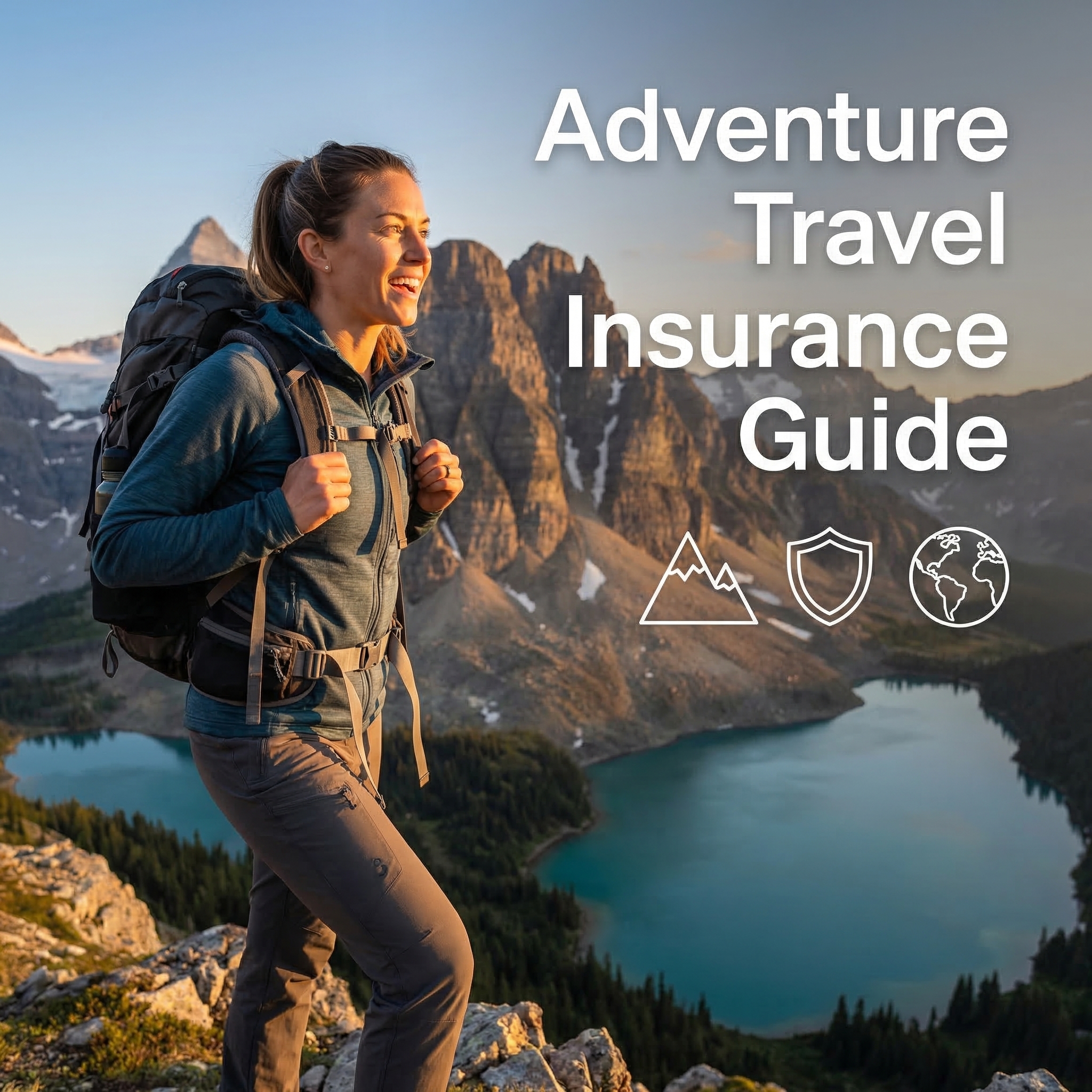
Adventure travel insurance is the difference between a thrilling story and a financial disaster when your pursuit of extraordinary experiences takes an unexpected turn. #AdventureTravelInsurance Whether you are scaling volcanic peaks in Iceland, diving coral reefs in Indonesia, skiing off-piste in the Swiss Alps, or mountain biking through the Andes, standard travel insurance frequently excludes the very activities that define your trip. In 2026, the adventure travel market continues to grow as more travelers seek experiences that push boundaries — and the insurance market has responded with specialized coverage designed for people who refuse to play it safe.
⠀
The fundamental problem is simple: standard travel insurance policies consider many popular adventure activities to be hazardous and exclude injuries related to them. A broken leg from skiing might not be covered. A decompression injury from scuba diving could be denied. A climbing fall in Patagonia might leave you with a massive hospital bill that your basic travel policy refuses to pay. Adventure travel insurance eliminates these exclusions, covering the activities you actually plan to do rather than only protecting you while you sit poolside.
⠀
Why Standard Travel Insurance Falls Short for Active Travelers
⠀
Standard travel medical policies are designed for the average tourist — someone who visits cities, eats at restaurants, and takes guided tours. When these policies reference hazardous activities, they cast a surprisingly wide net. Activities that most people consider perfectly reasonable recreational pursuits may be classified as excluded hazards under a standard plan.
⠀
The exclusion lists vary between insurers, but commonly excluded activities include skiing and snowboarding (particularly off-piste or backcountry), scuba diving below a specified depth, rock climbing, mountain biking on unpaved trails, motorbiking, zip-lining, white-water rafting above a certain class, bungee jumping, parasailing, and horseback riding. Some plans even exclude cycling in certain countries where road conditions are considered dangerous.
⠀
The consequences of these exclusions become real when an injury occurs. You file a claim for a snowboarding accident, and the insurer denies it because skiing and snowboarding were listed as excluded activities on page fourteen of your policy document. You have a legitimate thirty-thousand-dollar medical bill, and your insurance pays nothing. Adventure travel insurance prevents this scenario by explicitly covering the activities you plan to pursue.
⠀
What Adventure Travel Insurance Actually Covers
⠀
Comprehensive adventure travel insurance provides medical coverage for injuries sustained during a defined list of adventure and sporting activities. The best plans take an inclusive approach — covering a broad range of activities as standard and requiring optional add-ons only for genuinely extreme pursuits.
⠀
Water sports coverage typically includes scuba diving to specified depths (often thirty to forty meters), surfing, kitesurfing, white-water rafting up to Class IV rapids, kayaking, snorkeling, sailing, and jet skiing. Premium plans may include free-diving, technical diving, and offshore sailing as standard or optional coverages.
⠀
Winter sports coverage includes downhill and cross-country skiing, snowboarding, snowshoeing, and ice climbing. The distinction between groomed runs and backcountry or off-piste terrain matters — some plans cover resort skiing but exclude backcountry travel. If your plans include heli-skiing, ski touring, or off-piste riding, verify that your adventure travel insurance explicitly includes these variations.
⠀
Land-based activities covered by quality plans include hiking and trekking to specified altitudes, mountain biking, rock climbing (gym and outdoor), rappelling, zip-lining, ATV riding, horseback riding, and cave exploration. Altitude coverage is particularly important for trekkers — some plans exclude medical events above specific elevations, which creates gaps for anyone hiking at altitude in the Himalayas, Andes, or East African mountains.
⠀
Altitude Coverage: A Critical Detail for Trekkers and Climbers
⠀
Altitude-related illness represents one of the most significant medical risks in adventure travel, and adventure travel insurance must explicitly address it. Acute mountain sickness, high-altitude pulmonary edema, and high-altitude cerebral edema can become life-threatening emergencies requiring immediate descent and medical treatment.
⠀
Some plans cover medical events up to four thousand meters (approximately thirteen thousand feet). Others extend coverage to five thousand meters or six thousand meters. A handful of specialty plans cover events above six thousand meters, accommodating mountaineers on expeditions to the world’s highest peaks.
⠀
This altitude limit directly determines where your coverage applies. Trekking to Everest Base Camp reaches approximately five thousand three hundred meters. Kilimanjaro summits at five thousand eight hundred ninety-five meters. Popular Andean treks in Peru and Bolivia regularly exceed four thousand meters. If your adventure travel insurance caps altitude coverage at four thousand meters, you are uninsured for a significant portion of these iconic treks.
⠀
Helicopter evacuation from altitude is among the most expensive emergency scenarios in adventure travel. An evacuation from a Himalayan trekking route can cost twenty thousand to fifty thousand dollars. From an Andean peak, similar costs apply. Ensuring your evacuation coverage extends to the altitudes you plan to reach is as important as medical coverage itself.
⠀
Scuba Diving Coverage: Depth Limits and Decompression
⠀
Scuba diving represents one of the most popular adventure activities worldwide, and adventure travel insurance for divers requires specific attention to depth limits, decompression treatment coverage, and hyperbaric chamber access.
⠀
Standard policies that cover diving typically set depth limits at eighteen to thirty meters. Recreational divers pursuing advanced certifications dive to forty meters. Technical divers go deeper. Your policy must cover the depths you actually dive — not just the depth limit on your certification card, but the depths you realistically reach during dives.
⠀
Decompression sickness treatment — commonly requiring hyperbaric chamber therapy — is expensive and not available everywhere. A course of hyperbaric treatment can cost five thousand to twenty-five thousand dollars, and the nearest chamber might require emergency transport from a remote island to a larger city. Quality adventure travel insurance covers both the treatment itself and the transport to reach appropriate facilities.
⠀
Divers Alert Network (DAN) insurance represents a popular supplement to general travel insurance for serious divers. However, DAN coverage focuses specifically on dive-related incidents and does not replace comprehensive adventure travel insurance that covers your full range of activities and general medical needs while traveling.
⠀
Search and Rescue Coverage: When Getting Found Is Part of Getting Treated
⠀
Adventure travel in remote areas introduces a unique coverage need: search and rescue. If you are injured on a remote trekking route, lost while backcountry skiing, or stranded by weather in a mountainous area, rescue teams must locate and extract you before medical treatment can begin.
⠀
Search and rescue operations can involve helicopter crews, mountain rescue teams, and specialized technical rescuers operating in dangerous conditions. The costs range from several thousand dollars for a straightforward helicopter pickup to tens of thousands for extended multi-day search operations in remote terrain.
⠀
Not all adventure travel insurance includes search and rescue coverage. Some plans consider it part of medical evacuation. Others treat it as a separate benefit with its own coverage limit. A few exclude it entirely, covering only transport from a medical facility to another facility — not from a mountainside to a medical facility. Verify that your policy explicitly covers the cost of being found and extracted from remote locations, not just transported between hospitals.
⠀
Equipment and Gear Coverage for Adventure Travelers
⠀
Adventure travelers frequently carry expensive specialized equipment — dive gear, ski equipment, climbing hardware, camera systems, and technical clothing worth thousands of dollars collectively. While equipment coverage is not the primary purpose of adventure travel insurance, some plans include benefits for lost, damaged, or stolen gear that enhance the overall protection package.
⠀
Equipment coverage through travel insurance typically supplements your homeowner’s or renter’s insurance rather than replacing it. Coverage limits for personal belongings usually cap at one thousand to three thousand dollars with per-item maximums. For high-value equipment, consider specialty gear insurance or riders on your homeowner’s policy in addition to whatever equipment coverage your travel insurance provides.
⠀
Delayed equipment coverage can be more immediately useful than loss coverage for adventure travelers. If your ski bag does not arrive with you at the airport, your plan may reimburse rental equipment costs for the first few days until your gear arrives. For activities requiring specialized equipment, this benefit prevents a ruined day or week of your trip due to airline baggage handling issues.
⠀
Choosing the Right Level of Adventure Coverage
⠀
Adventure travel insurance is not one-size-fits-all. The right coverage depends on the specific activities you plan, the locations you will visit, and your personal risk tolerance.
⠀
Recreational adventure travelers — those who enjoy resort skiing, guided snorkeling, zip-line tours, and moderate hiking — need a plan that includes these activities as standard covered benefits. Many mid-range travel insurance plans cover common recreational activities without requiring adventure-specific add-ons.
⠀
Serious adventure travelers — those pursuing multi-day wilderness treks, technical climbing, advanced diving, or high-altitude mountaineering — need specialized adventure travel insurance with higher activity coverage limits, explicit altitude and depth provisions, and search and rescue benefits. These plans cost more but provide coverage precisely calibrated to higher-risk pursuits.
⠀
Professional or competitive athletes require the highest level of coverage and should verify that their plans cover participation in organized competitions, races, or professional activities. Many adventure travel insurance plans distinguish between recreational and competitive participation, and injuries sustained during competitions may be excluded under recreational coverage.
⠀
Red Flags When Shopping for Adventure Coverage
⠀
Several warning signs indicate that an adventure travel insurance plan may not deliver the coverage it appears to promise.
⠀
Vague activity coverage language — phrases like “reasonable recreational activities” without a specific list — creates ambiguity that insurers can exploit when denying claims. The best plans provide explicit lists of covered activities with clearly defined parameters (depths, altitudes, class ratings) rather than subjective descriptions.
⠀
Low per-event maximums buried in the fine print can limit payouts even when the overall coverage limit seems adequate. A plan with one million dollars in total medical coverage but a twenty-five thousand dollar per-event maximum for sport-related injuries effectively caps your adventure coverage at a fraction of the headline number.
⠀
Mandatory guide or operator requirements that condition coverage on using licensed guides or approved operators may be reasonable for certain activities but impractical for others. If your plan requires a certified guide for every covered activity, independently organized adventures may fall outside coverage.
⠀
Build Your Protection Around Your Adventures
⠀
Adventure travel insurance transforms how you approach your most exciting travel experiences. Instead of wondering whether an injury would be covered or worrying about the financial consequences of a rescue operation, you focus on the experience itself — knowing that comprehensive coverage has your back if something goes wrong.
⠀
Curl Insurance Services helps adventure travelers identify coverage that matches their specific activities, destinations, and risk profiles. Whether you need basic recreational coverage for a family ski trip or comprehensive protection for a Himalayan mountaineering expedition, we can find the plan that covers what you actually do rather than what a standard policy assumes you will do.
⠀
Ready to protect your next adventure? Text us at (949) 506-2746 or visit curlinsuranceservices.com/travel-insurance to explore adventure travel insurance options built for travelers who live boldly.